Urticaria (hives) presents as sudden, migratory, pruritic wheals that appear and resolve unpredictably—a pattern Western medicine frequently classifies as "idiopathic."
Traditional Chinese medicine (TCM), by contrast, has documented this presentation for over millenniums under the term Yin Zhen (癮疹), attributing it to a coherent and long-established pathomechanism.
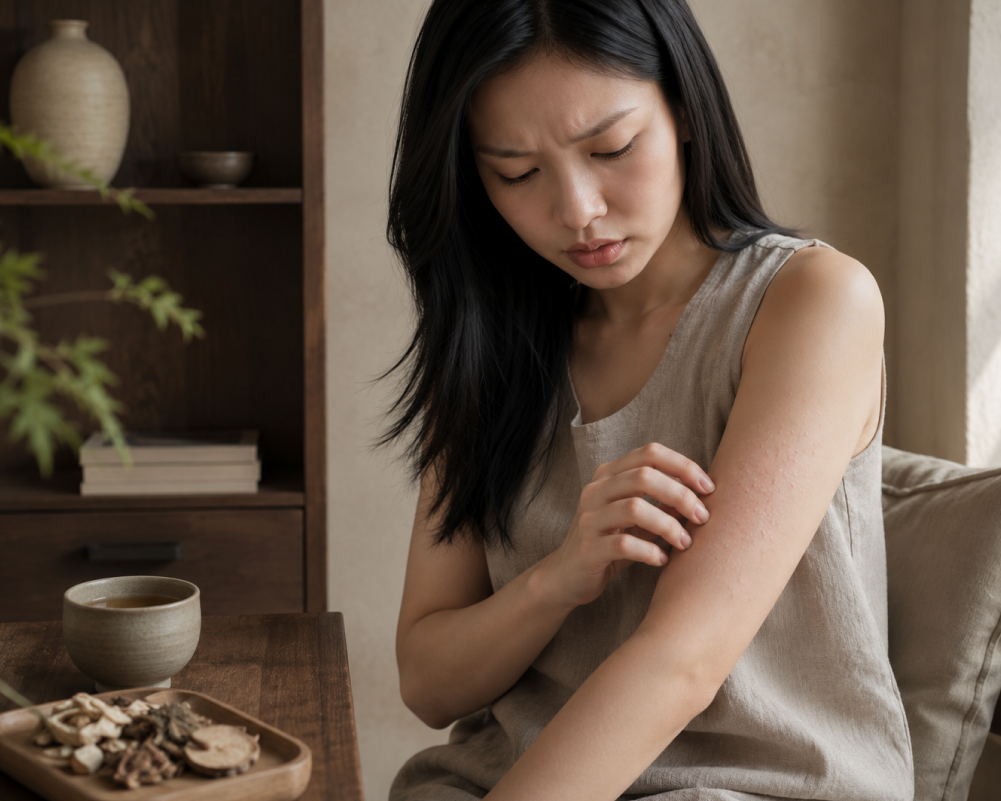
The Root Causes: A Two-Front Factors
TCM theory identifies both internal and external etiologies. Internal factors include weak constitution, poor diet (particularly excessive intake of pungent or stimulating foods), overexertion, and unresolved emotional stress. External factors involve invasion by Wind, Cold, Dampness, or Heat, as well as exposure to physical irritants.
The Wind Connection: Why Hives Move and Vanish
Hives are rarely attributed to a single cause; typically, internal weakness creates the susceptibility that allows an external pathogen—or an internal imbalance—to manifest as disease. Wind in nature is fast-moving, unpredictable, and never stays in one place—exactly how hives behave on the skin. Because Wind rarely acts alone, it is classically diagnosed in combination with Heat, Cold, or Dampness, with each pairing producing a distinct clinical presentation.
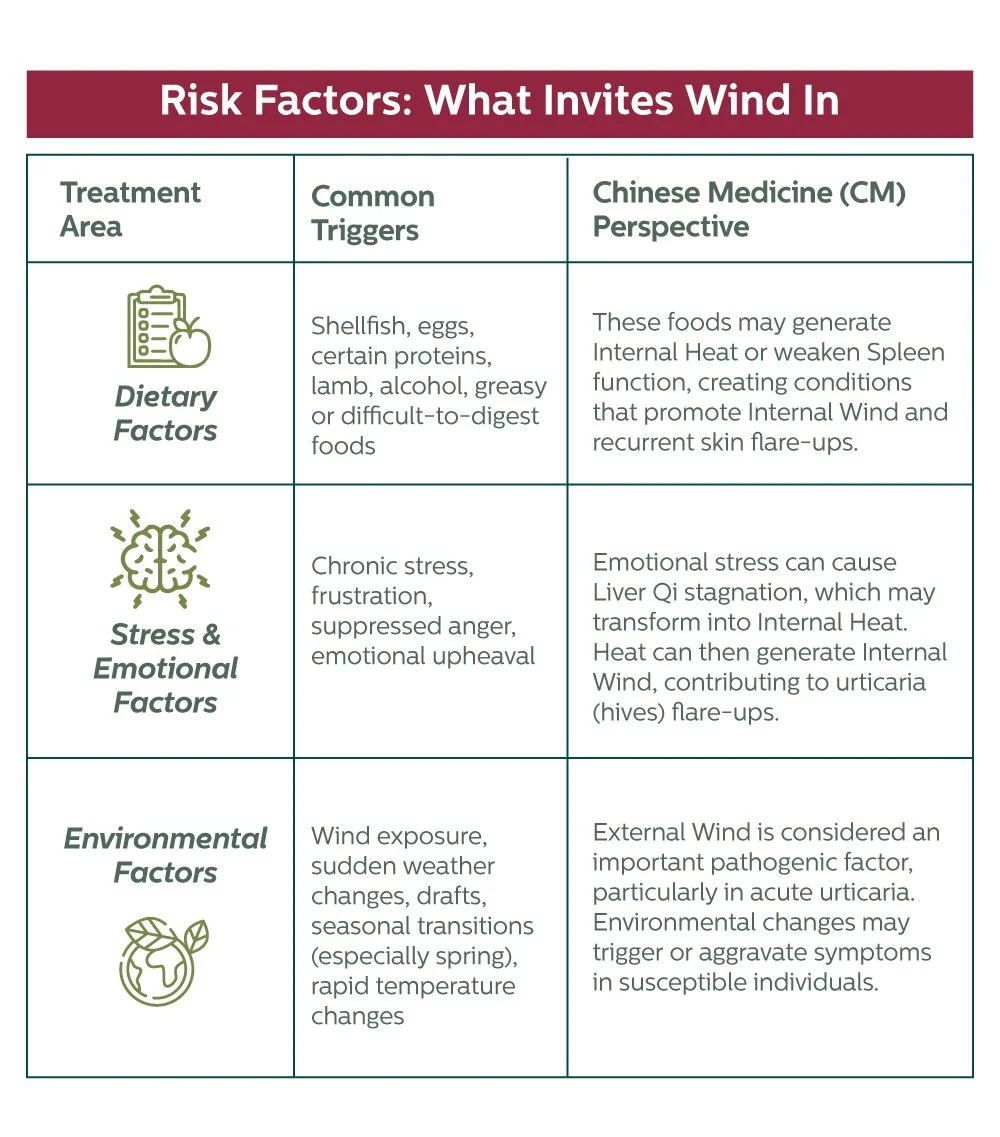
Risk Factors: What Invites Wind In
Dietary Triggers
TCM theory identifies several classic Wind-provoking foods, including shellfish, eggs, certain proteins, and "warming" foods such as lamb or alcohol. These foods are not thought to generate Wind directly; rather, they generate internal Heat or impair digestive function, thereby creating the internal conditions in which Wind can take hold. Greasy or hard-to-digest foods similarly burden Spleen function, indirectly predisposing patients to chronic, recurrent outbreaks.Stress and Emotional Factors
In TCM, the Liver is the organ most closely associated with Wind generation. Chronic stress, frustration, or suppressed anger leads to Liver Qi stagnation, and stagnant Qi has a well-documented tendency to transform into internal Heat. This Heat can, in turn, stir internal Wind, which characteristically moves outward to the skin. This mechanism explains the clinical observation that hives frequently flare during periods of stress, before major life events, or amid emotional turbulence—not as a psychosomatic dismissal, but as a physiologically coherent process of Liver Qi dysregulation within the CM framework.Environmental Factors
External Wind—Wind in its literal, climatic sense—is likewise regarded as a legitimate trigger. Sudden weather changes, exposure to drafts, seasonal transitions (particularly the shift into spring, Wind's associated season), and abrupt temperature differentials between indoor and outdoor environments are all recognized precipitants, particularly in acute, short-duration presentations.
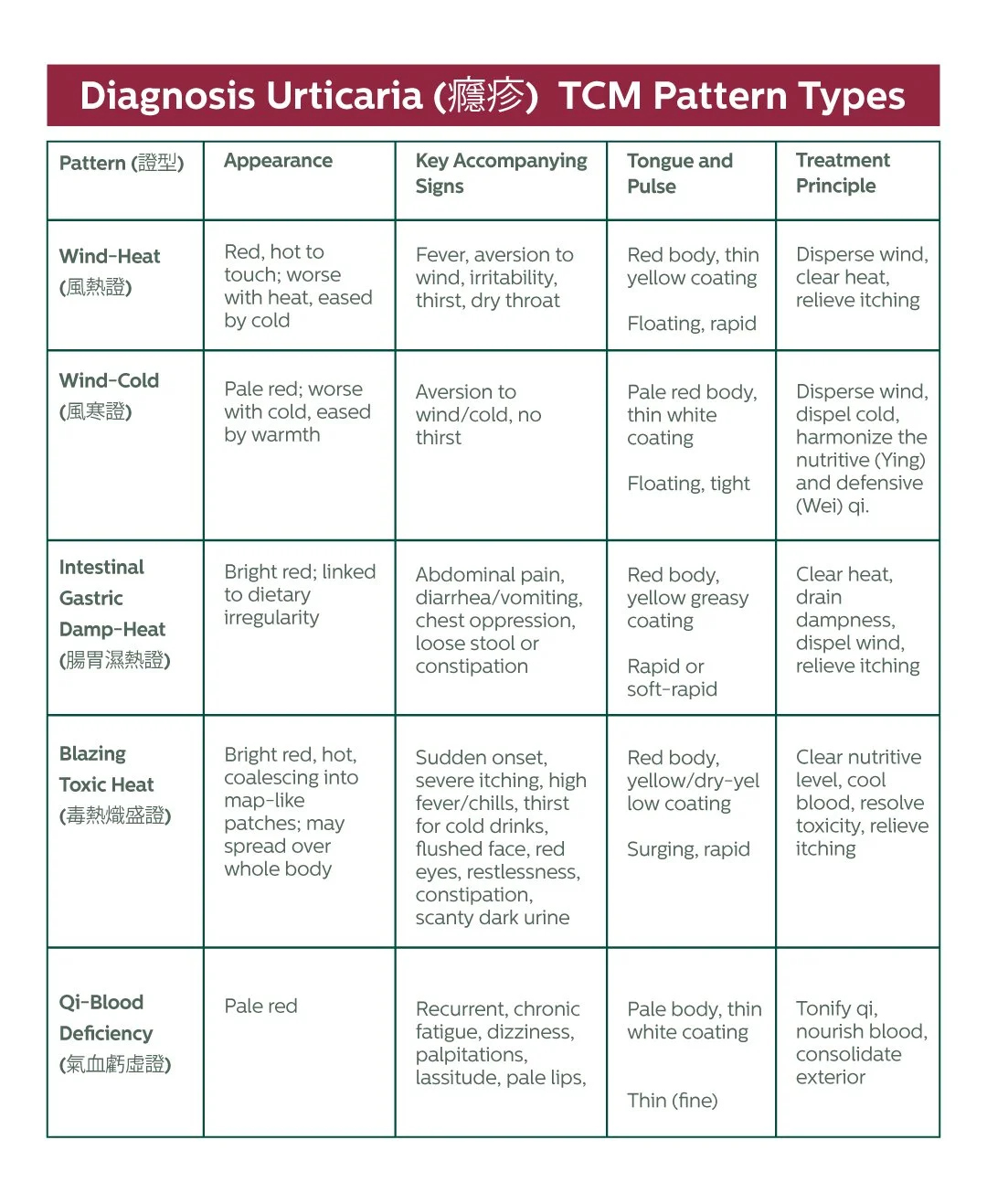
Diagnosis Urticaria (癮疹) – 5 TCM Pattern Types
Practitioners differentiate hives into distinct patterns, and the appropriate treatment method must be selected clinically based on the pattern presented by the patient's condition.
Treatment
Acupuncture
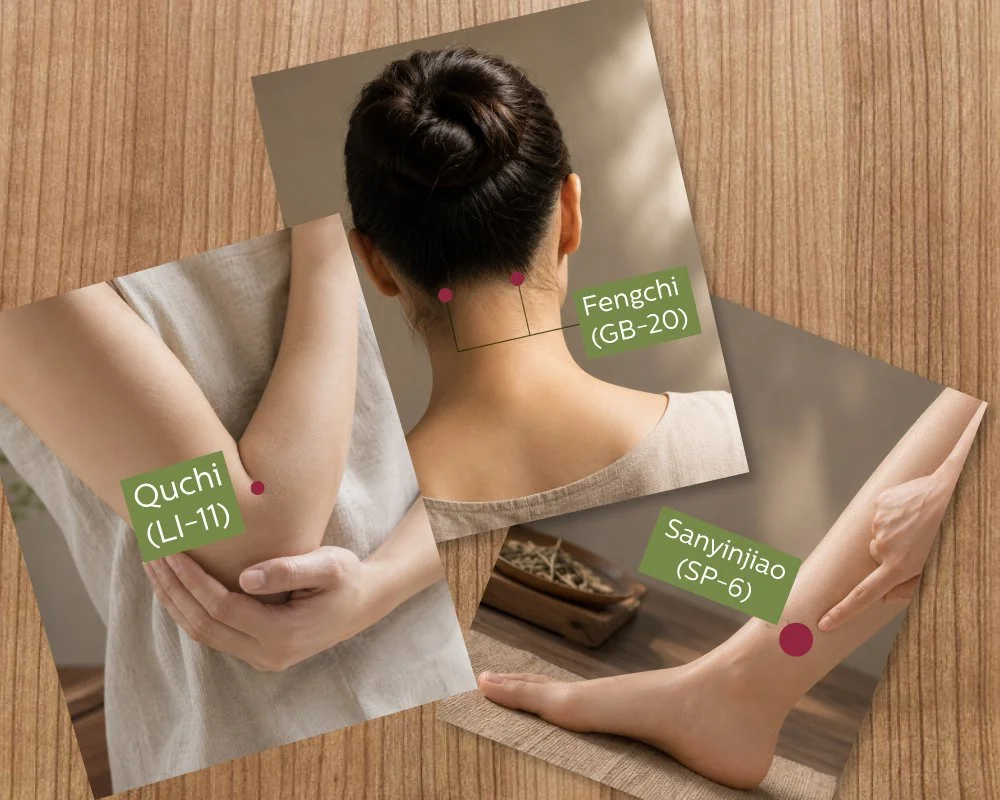
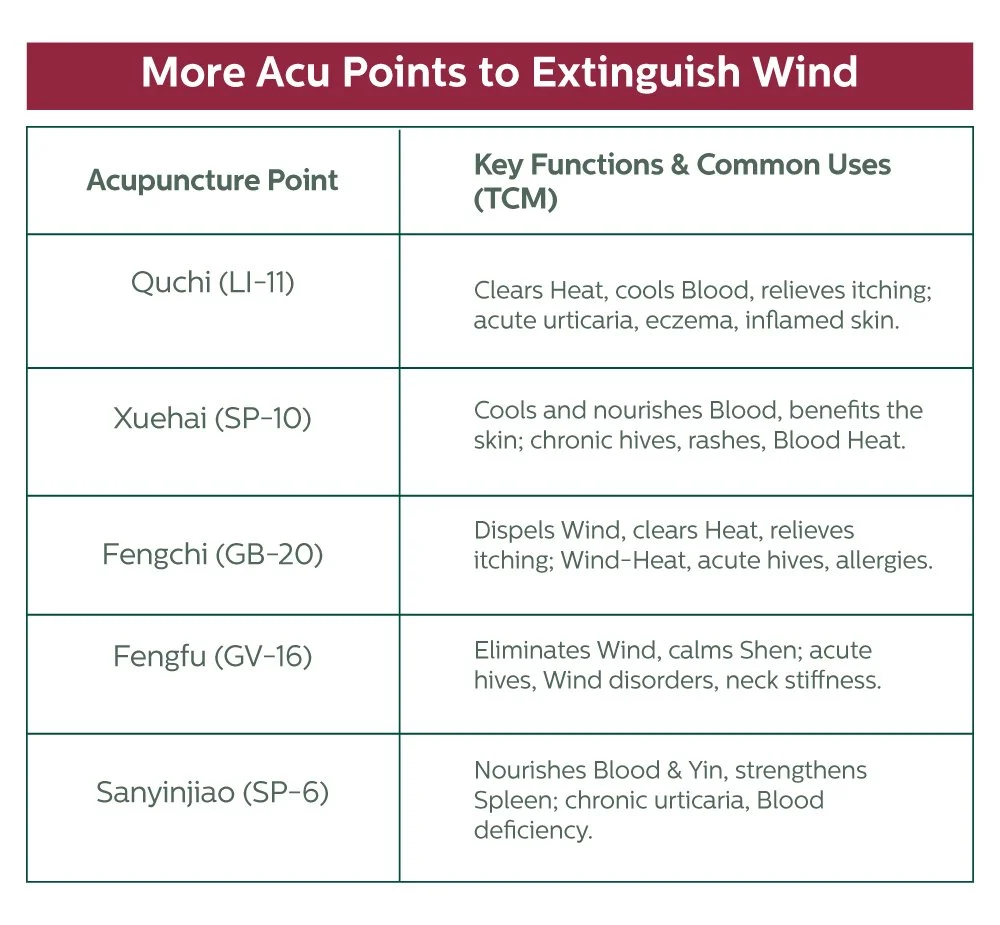
Common acupuncture point combinations include Quchi (LI-11) and Xuehai (SP-10) to cool Blood and clear Heat, Fengchi (GB-20) and Fengfu (GV-16) (both containing "Feng," or Wind, in their names) to directly address Wind pathology, and Sanyinjiao (SP-6) to support Blood nourishment in chronic, deficiency-pattern cases.
Herbal Supplement Approaches
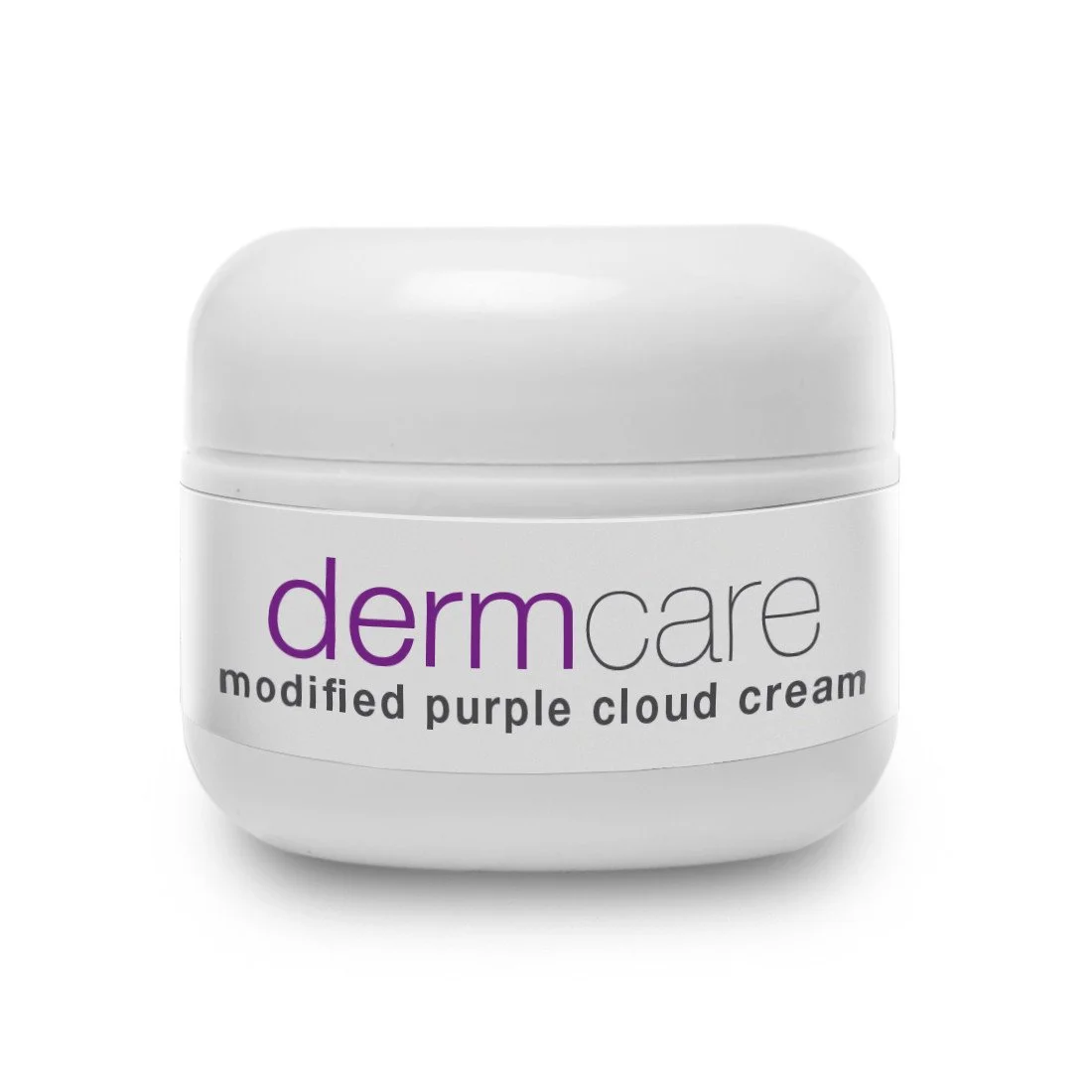
-
Modified Purple Cloud Cream (Zi Yun Gao) (1 oz) (dermcare)
Indications: For damp heat toxin manifesting on the skin as irritations and inflammation.Ingredients:
Zi Cao: Clears Damp-Heat from the skin, Cools the blood, Moistens the intestines
Dang Gui: Tonifies the Blood, Reduces swelling, Expels pus, Generates flesh and alleviates pain
Huang Qin: Clears Heat and dries Dampness
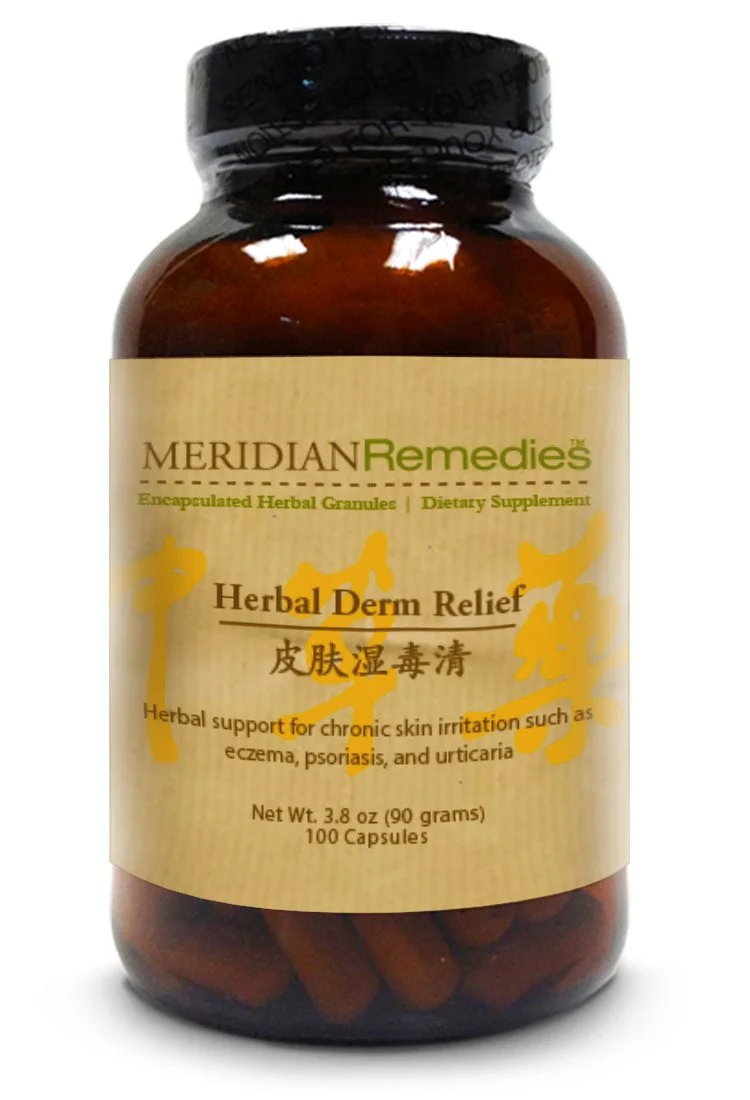
-
Herbal Derm Relief (100 Caps) (Meridian Remedies)
An herbal dietary supplement to support healthy skin in individuals with chronic irritating conditions such as eczema, psoriasis, or urticaria (hives).Ingredient: Huang Qin, Long Dan Cao, Xu Chang Qing, Su Zi, She Chuang Zi, Huang Lian, Cang Zhu, Ma Chi Xian, Wu Mei, Ku Shen
-
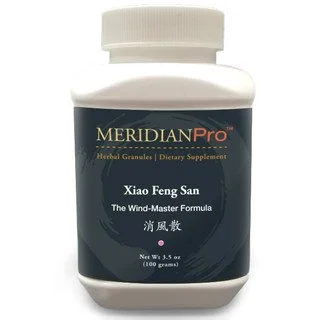
Xiao Feng San (Formula)
Indications: For Wind-Heat and Damp-Heat skin disorders (Urticaria, Eczema, Psoriasis, Contact dermatitis)Ingredient: Jing Jie, Fang Feng, Niu Bang Zi, Chan Tui, Cang Zhu, Ku Shen, Mu Tong, Shi Gao, Zhi Mu, Sheng Di Huang, Dang Gui, Hei Zhi Ma, Gan Cao
Consult a qualified practitioner of Chinese Medicine before use.
The Takeaway

TCM offers a personalized approach to managing hives by addressing the underlying root cause rather than simply suppressing symptoms. For the best outcomes, seek care from a licensed practitioner of Chinese Medicine who can provide an individualized diagnosis and treatment plan. If hives are severe, recurrent, or accompanied by symptoms such as difficulty breathing, swelling of the lips or tongue, or dizziness, seek immediate medical attention. An integrative approach that combines conventional medical evaluation with evidence-informed Chinese medicine may provide the most comprehensive care.
Why Choose Kamwo?
At Grand Meridian Clinic, we blend TCM wisdom with modern approaches to uncover and treat the root of your skin concerns. Whether it’s through customized herbal therapy, acupuncture, or seasonal care plans, Kamwo is here to support your wellness journey.
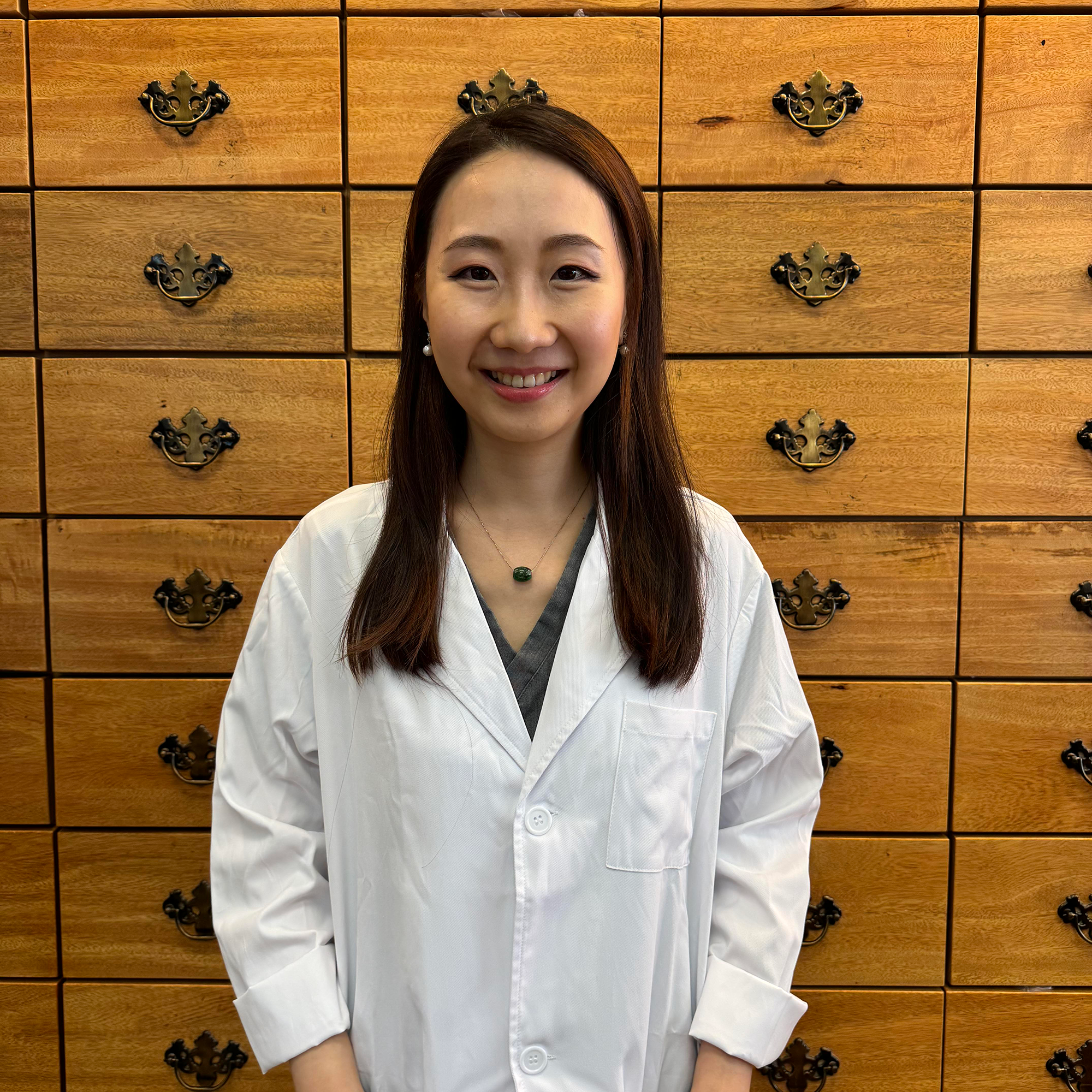
Dr. Olivia Choi
L.Ac, DACM, MPH, MScBBB, BPharm
Grand Meridian Clinic