Ten-year experiences at a Medical Center in Taiwan.
Photo by Shutterstock 291352844. Image of topical pain on a leg sourced from Shutterstock. Available at: https://www.shutterstock.com/es/image-photo/topical-pain-leg-291352844

Ten-year experiences at a Medical Center in Taiwan.

Photo by Shutterstock 291352844. Image of topical pain on a leg sourced from Shutterstock. Available at: https://www.shutterstock.com/es/image-photo/topical-pain-leg-291352844
A randomized placebo-controlled double-blind study
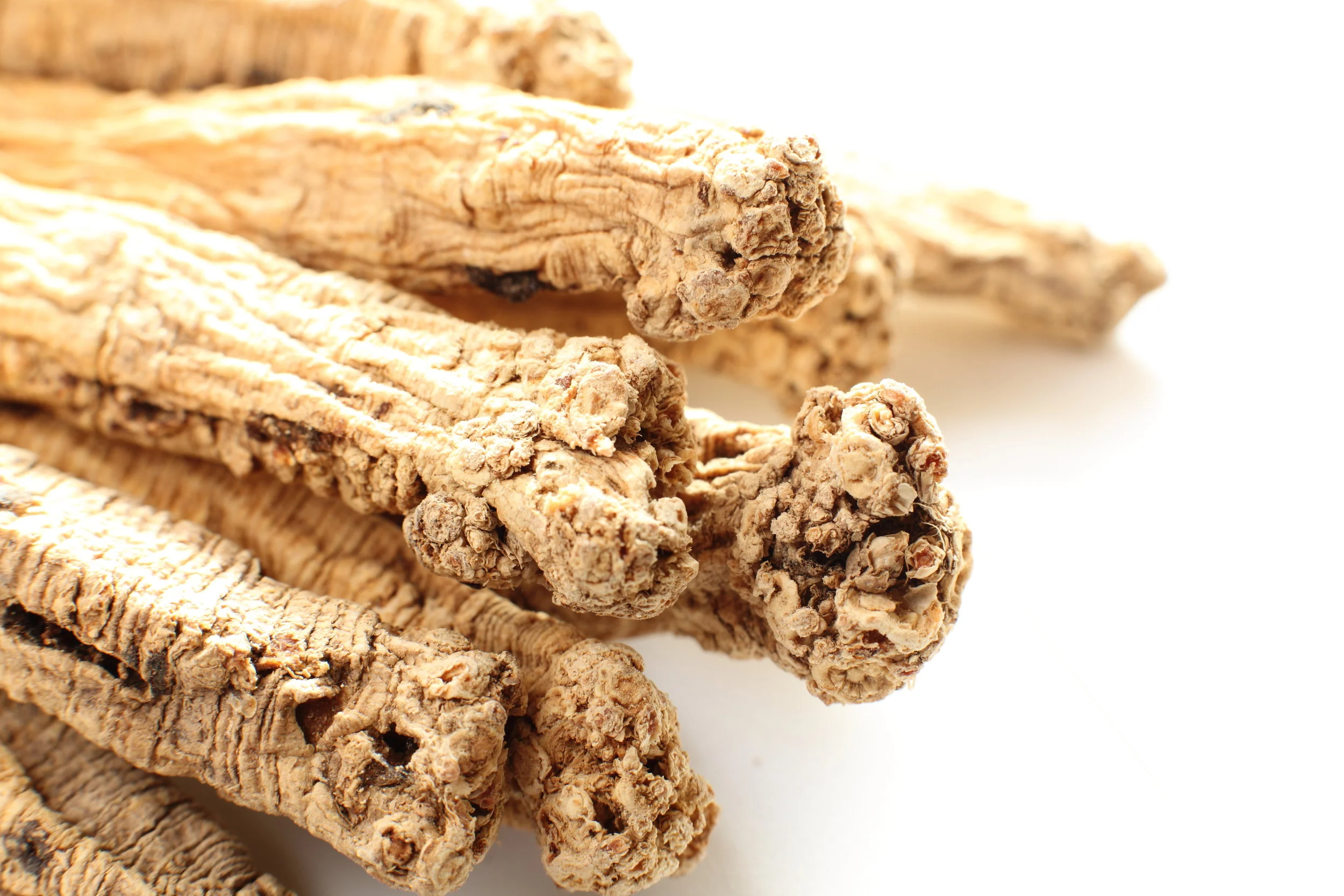
Photo by Shutterstock 55439542. Image of a Chinese traditional medical ingredient sourced from Shutterstock. Available at: https://www.shutterstock.com/es/image-photo/chinese-traditional-medical-ingredient-55439542
Plug “wellness” into a search engine and you’ll get 405 million hits — and a lot of advice. Everyone, from genuine experts to click-bait writers, has an opinion about what’s good for us.

Illustration by Christopher Silas Neal. Image sourced from Stanford Medicine. Available at: https://stanmed.stanford.edu/wp-content/uploads/2016/10/well_now_portrait-banner-768x915.jpg
Research shows mindfulness could cut down on the spread of hospital-acquired infections.

Photo by The Washington Post. Image sourced from The Washington Post. Available at: https://img.washingtonpost.com/rf/image_908w/WashingtonPost/Content/Blogs/post-politics/201407/Images/wonk1211.jpg
Chinese medical literature has been relatively silent on the problem of BPH (8). Disorders of urination have been noted since ancient times, classified as "lin" syndromes, which involve obstruction of urinary flow. In descriptions of the lin syndromes, most times the obstruction of urination is described as accompanied by symptoms that are not characteristic of BPH, such as blood in the urine or passing of stones or cloudy urine. Therefore, while BPH may have been experienced and treated as one of the lin syndromes, it is unclear whether any of the therapies were specific for BPH.

Photo by Shutterstock 290658917. Image of a variety of herbs including rosemary, parsley, and bay leaves sourced from Shutterstock. Available at: https://www.shutterstock.com/es/image-photo/herbs-variety-rosemary-parsley-bay-leaves-290658917
The meaning of the name triple burner, sanjiao, is unclear; “burner” gives the impression that this “organ system” generates heat, perhaps a lot of heat, but there is little evidence that it does that, rather acting as a conduit for heat transferred between other organs. An alternative interpretation of the name has been the “three burning spaces” which is somewhat better, in the sense that the location or zone of influence of this organ system can encompass three “heat sources” without itself being the generator of the heat (e.g., kidney, spleen, and heart yang). Even then, the term is not entirely suitable.

By Wellcome Images, a website operated by Wellcome Trust. ©
Available at: https://upload.wikimedia.org/wikipedia/commons/thumb/3/33/The_Triple_Burner_%28san_jiao%29%2C_Chinese_woodcut%2C_1817_Wellcome_L0034731.jpg/392px-The_Triple_Burner_%28san_jiao%29%2C_Chinese_woodcut%2C_1817_Wellcome_L0034731.jpg?20141012044650
A sigh is a deep breath, but not a voluntary deep breath. It starts out as a normal breath, but before you exhale, you take a second breath on top of it," Feldman explained. "When alveoli collapse, they compromise the ability of the lung to exchange oxygen and carbon dioxide. The only way to pop them open again is to sigh, which brings in twice the volume of a normal breath."

Photo by Quinn Dombrowski/Flickr. Image of lungs sourced from ScienceAlert. Available at: https://www.sciencealert.com/images/articles/processed/Lungs_web_1024.jpg
In China, traditional herbal medicine played a prominent role in the strategy to contain and treat severe acute respiratory syndrome (SARS).1 Eighty per cent of African populations use some form of traditional herbal medicine,2,3 and the worldwide annual market for these products approaches US$ 60 billion.2 Many hope traditional herbal medicine research will play a critical role in global health. China, India, Nigeria, the United States of America (USA) and WHO have all made substantial research investments in traditional herbal medicines.2 Industry has also invested millions of US dollars looking for promising medicinal herbs and novel chemical compounds.4,5 This is still a relatively modest investment compared to the overall pharmaceutical industry; however, it raises interesting ethical questions, some of which are not faced in more conventional drug development.

Photo by Shutterstock 190231982. Image of hands protecting a mint plant in a vegetable garden sourced from Shutterstock. Available at: https://www.shutterstock.com/es/image-photo/hands-protect-mint-plant-vegetable-garden-190231982
Can’t get in an hour or more of these types of activities per day? Just 25 minutes of moderate activity is somewhat protective, even for people who sit for eight or more hours per day. The way physical activity energy expenditure was calculated, vigorous activities count more, so less time of the most strenuous exercise is needed to be protective.

Photo by Shutterstock 2156387937. Image of a woman walking her golden retriever sourced from Dom Media Library. Available at: https://domf5oio6qrcr.cloudfront.net/medialibrary/8947/Get-up-stand-up.jpg
To the surprise of doctors and patients alike, accumulating research suggests that most chronic back pain isn’t actually the result of illness or injury. Study after study indicates instead that back pain is very often caused by our thoughts, feelings, and resulting behaviors. And an exciting new study now demonstrates that treatments aimed at our beliefs and attitudes can really help.

Photo by gstockstudio. Image of a young muscular African man touching his hip while standing against a grey background sourced from Pro Photo. Available at: https://domf5oio6qrcr.cloudfront.net/medialibrary/8862/back-pain-lower-black-man.jpg
Zoologists have documented an incredible relationship between wild birds in Mozambique and the local Yao people, who team up together to hunt for honey.
Using a series of special hails and chirps the humans and birds are able to communicate - honeyguide birds lead the way to hidden beehives, where the Yao people share the spoils with their avian friends.

Photo by Claire Spottiswoode. Image of a honey hunter sourced from ScienceAlert. Available at: https://www.sciencealert.com/images/articles/processed/honeyhunter_web_1024.jpg
So why might viruses care about our body clock? Since our cells are miniature factories, making things that the virus must have to copy itself, the virus is less likely to succeed when the production line is shut down. This is what we tested in the laboratory, by infecting cells and mice at different times of the day. We found that viruses are less able to infect in the late afternoon. In contrast, in the early morning, our cells are hives of biosynthetic activity, at least from the virus’s viewpoint. So, if a virus tries to take over a cell in the early day, it is far more likely to succeed, and spread faster, than if it encounters a rather less favourable climate in the evening.

Next time just work with your body clock. Photo by Marcos Mesa Sam Wordley. Image sourced from The Conversation. Available at: https://images.theconversation.com/files/134123/original/image-20160815-27199-10imdsv.jpg?ixlib=rb-4.1.0&q=45&auto=format&w=926&fit=clip
Bringing plants indoors is a sustainable way to improve indoor air quality quickly. Not only are plants aesthetically pleasing, but NASA has found certain ones to be surprisingly useful in absorbing harmful gasses and cleaning indoor air.

Photo: Stocksy. Image of a Boston fern sourced from MindBodyGreen. Available at: https://mindbodygreen-res.cloudinary.com/image/upload/w_480,q_auto,f_auto,fl_lossy/ftr/boston_fern.jpg
Carnivorous plants seem like the stuff of science fiction. They’re strategically designed to lure insects into inescapable traps, where they proceed to melt the bugs alive using digestive enzymes. Now, this badass evolutionary trait might be able to help humans cope with one of our modern-day challenges: gluten intolerance.

Photo by Motherboard. Image sourced from Motherboard. Available at: https://motherboard-images.vice.com/content-images/contentimage/36468/1470776042622323.jpg?crop=0.855088577570232xw:1xh;center,center&resize=20:*
"Things like vanilla, carrot, garlic, anise, mint — these are some of the flavors that have been shown to be transmitted to amniotic fluid or mother's milk," says Julie Mennella, who studies taste in infants at the Monell Chemical Senses Center. In fact, Mennella says there isn't a single flavor they have found that doesn't show up in utero. Her work has been published in the journal Pediatrics.

Mothers might not realize that the tastes and flavors they savor while pregnant can influence their babies' palates later. Photo by Maggie Starbard/NPR. Image sourced from NPR. Available at: https://media.npr.org/assets/img/2011/08/05/baby_food_wide-8bc8017ae245838c9837d63508da8b413db98fb5.jpg?s=700&c=85&f=webp
For centuries, fungi were widely held to be harmful to plants, parasites that cause disease and dysfunction. More recently, it has become understood that certain kinds of common fungi exist in subtle symbiosis with plants, bringing about not infection but connection. These fungi send out gossamer-fine fungal tubes called hyphae, which infiltrate the soil and weave into the tips of plant roots at a cellular level. Roots and fungi combine to form what is called a mycorrhiza: itself a growing-together of the Greek words for fungus (mykós) and root (riza). In this way, individual plants are joined to one another by an underground hyphal network: a dazzlingly complex and collaborative structure that has become known as the Wood Wide Web.

Recent scientific revelations raise big questions about what trading, sharing, or even friendship might mean among plants. Illustration by Enzo Pérès-Labourdette. Image sourced from The New Yorker. Available at: https://media.newyorker.com/photos/5909787d8b51cf59fc423627/master/w_1280,c_limit/Macfarlane-AWalkingTouroftheWoodWideWeb1.jpg
The Acorus plant family represents the source of one of the world’s most widely used medicinals. In Egypt, the Chester Beatty Papyrus VI mentioned Acorus as an ingredient for a digestive plaster around 1,300 BC. In ancient Europe, Acorus was a symbol of love, lust and affection. The calamus variety, often referred to as Sweet Flag, was added to absinthe and digestive bitters, used in the perfume industry and as a flavoring for pipe tobacco.

Fresh Shichangpu (Acorus gramineus), recently pulled from the ground where it grows (Dabieshan Mountains, Jiangxi, China). Photo by Classical Chinese Medicine. Image sourced from Classical Chinese Medicine. Available at: https://classicalchinesemedicine.org/wp-content/uploads/2014/11/shichangpu_full_web.jpg
Sanqi literally means “the three seven herb,” referring to the fact that the plant tends to form three branches with seven leaves growing on each of them. In addition, peasant wisdom mandates that the root is harvested between 3-7 years of maturity, and grown in conditions that facilitate 3 parts sunlight and 7 parts shade. The plant is thus typically cultivated under black plastic tarps that are easily recognizable when driving through traditional Sanqi territory in Yunnan and Guangxi.

3 year old freshly harvested Sanqi roots, brought to market by local farmers at Sanqi Trading Center. Photo by Classical Chinese Medicine. Image sourced from Classical Chinese Medicine. Available at: https://classicalchinesemedicine.org/wp-content/uploads/2014/11/sanqi_WEB-300x200.jpg
The practice of herbal medicine in Japan.

Genetsu Kagawa (1700-1777), from the Kagawa family collection. Image sourced from ITM Online. Available at: http://www.itmonline.org/image/kampo3.jpg
Blind Acupuncturists, Insertion Tubes, Abdominal Diagnosis, and the Benten Goddess

Todo Yoshimasu (1702-1773). Image sourced from ITM Online. Available at: http://www.itmonline.org/image/japacu2.jpg