From “heat” and “blood” to individualized herbal strategies,
exploring the TCM lens on psoriasis.
Psoriasis vulgaris — known in Traditional Chinese Medicine (TCM) as 白疕 — is a common, chronic, relapsing inflammatory dermatosis. Its etiology is multifactorial, involving genetic predisposition, infectious triggers, metabolic dysregulation, immune dysfunction, endocrine imbalance, psychoneurological stress, and environmental exposure. Because the disease follows a prolonged and recurrent course that is difficult to cure, it carries a significant physical and psychological burden. Consequently, the primary therapeutic goal in both conventional and TCM management is not necessarily permanent cure, but rather disease control, relief symptoms, thereby improving the patient's overall quality of life.
In TCM perspective, the treatment is primarily through the lens of blood-level pathology. Based on the morphology of skin lesions and other common symptoms, the condition is classically differentiated into three patterns: Blood-Heat, Blood-Dryness (from Blood Deficiency), and Blood-Stasis.
Differentiation of Patterns
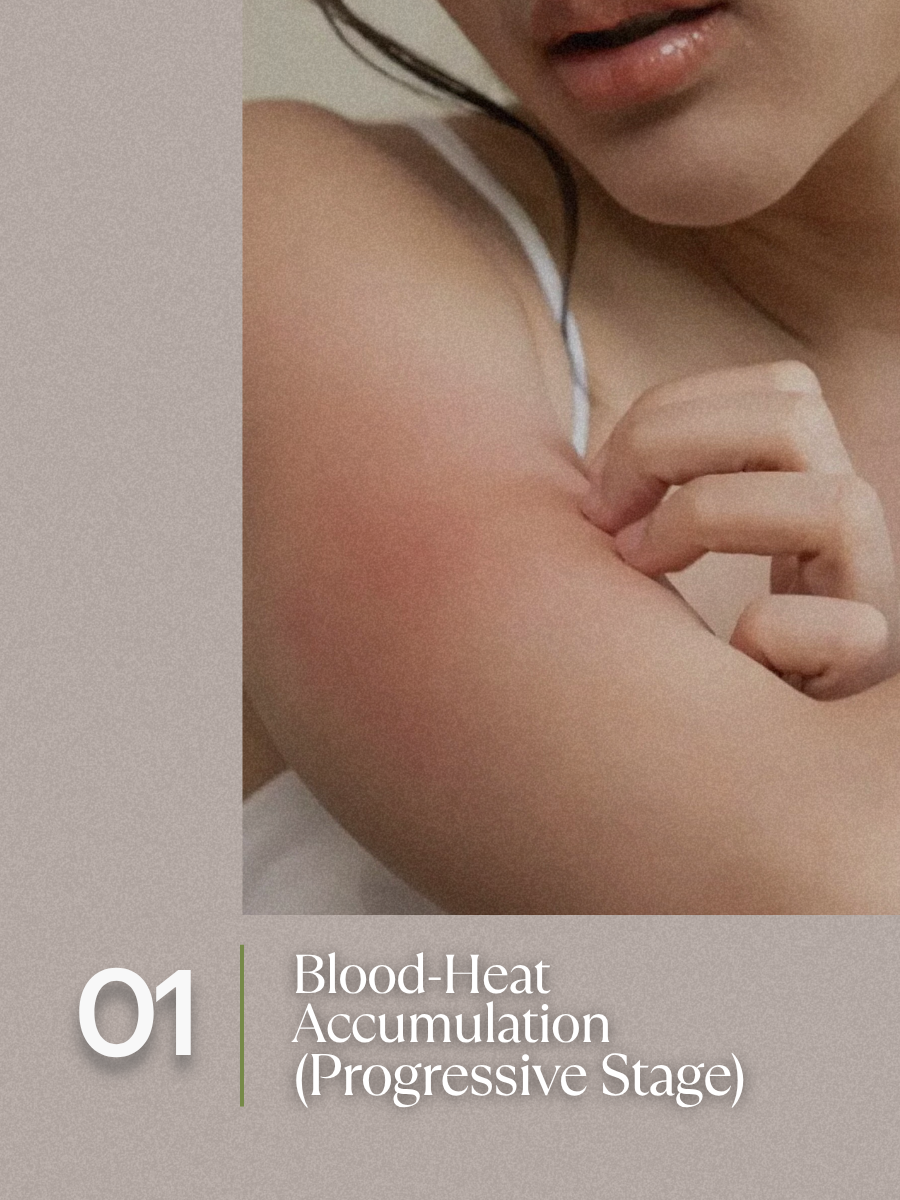
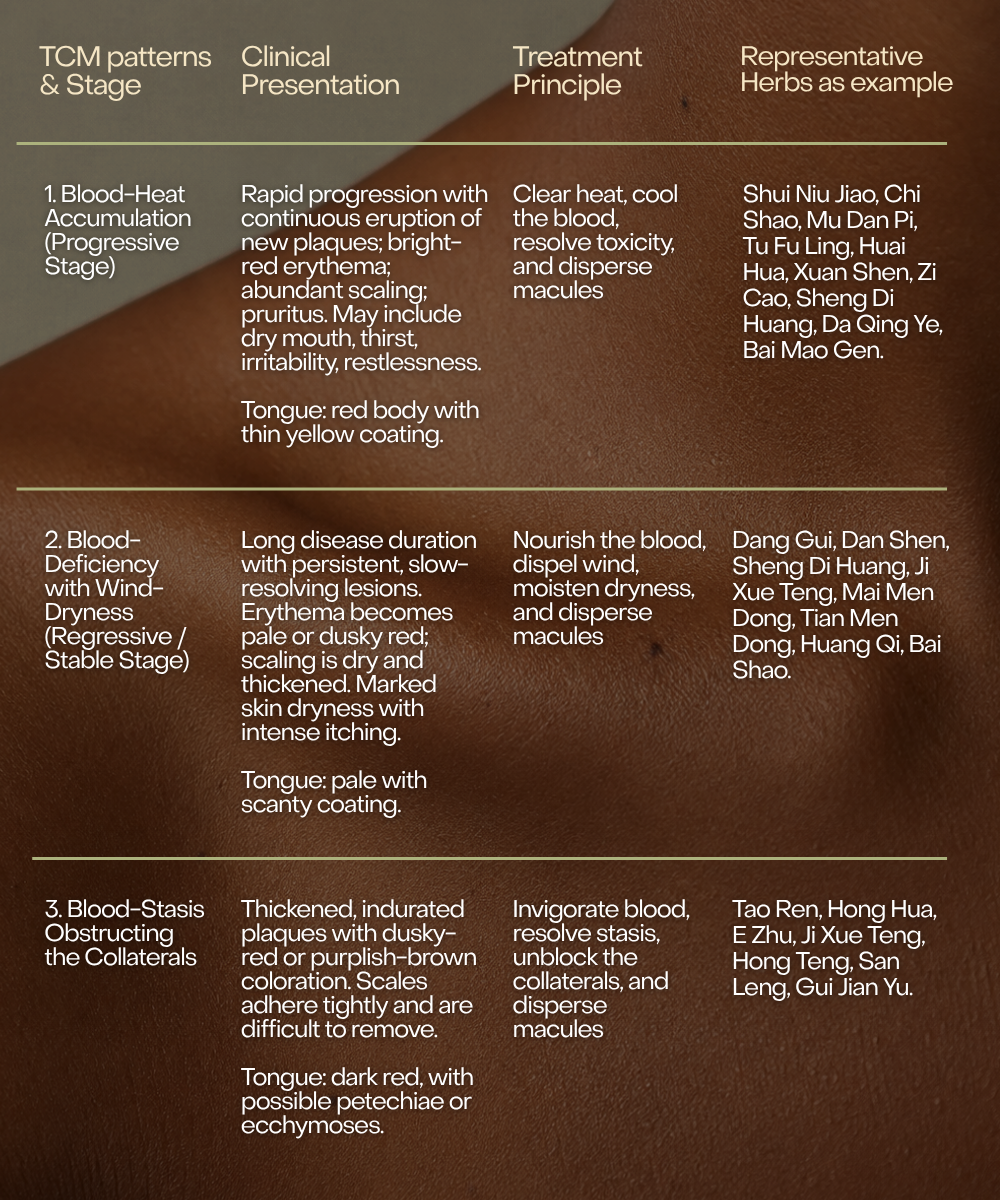
1. Blood-Heat Accumulation Syndrome
(血热内蕴证) — Progressive Stage
- Clinical presentation: Rapid progression of lesions with continuous eruption of new plaques; bright red erythema; abundant scaling; associated pruritus. Systemic signs include dry mouth, thirst, irritability and restlessness, a red tongue body, and a thin yellow coating.
- Treatment principle: Clear heat, cool the blood, resolve toxicity, and disperse macules.
- Representative herbs: Shui Niu Jiao, Chi Shao, Mu Dan Pi, Tu Fu Ling, Huai Hua, Xuan Shen, Zi Cao, Sheng Di Huang, Da Qing Ye, Bai Mao Gen.
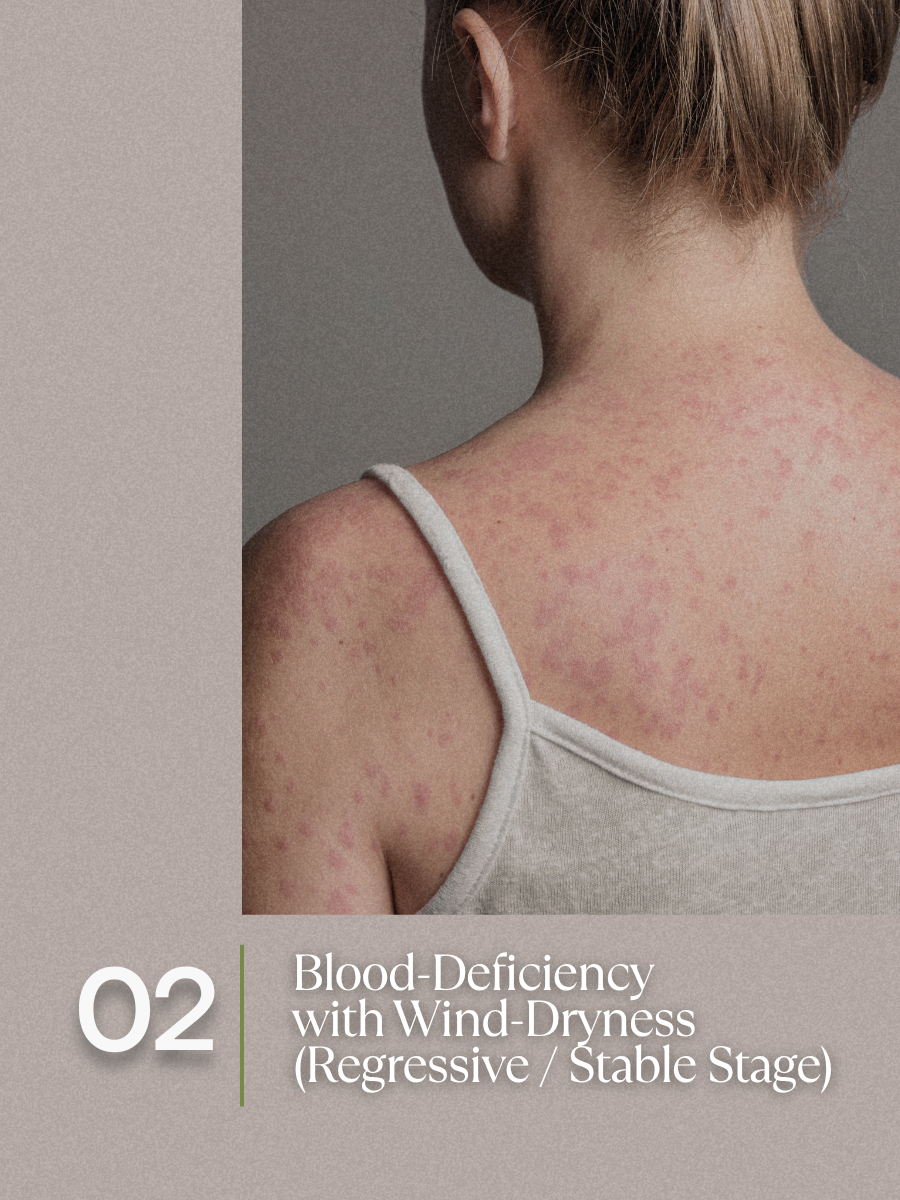
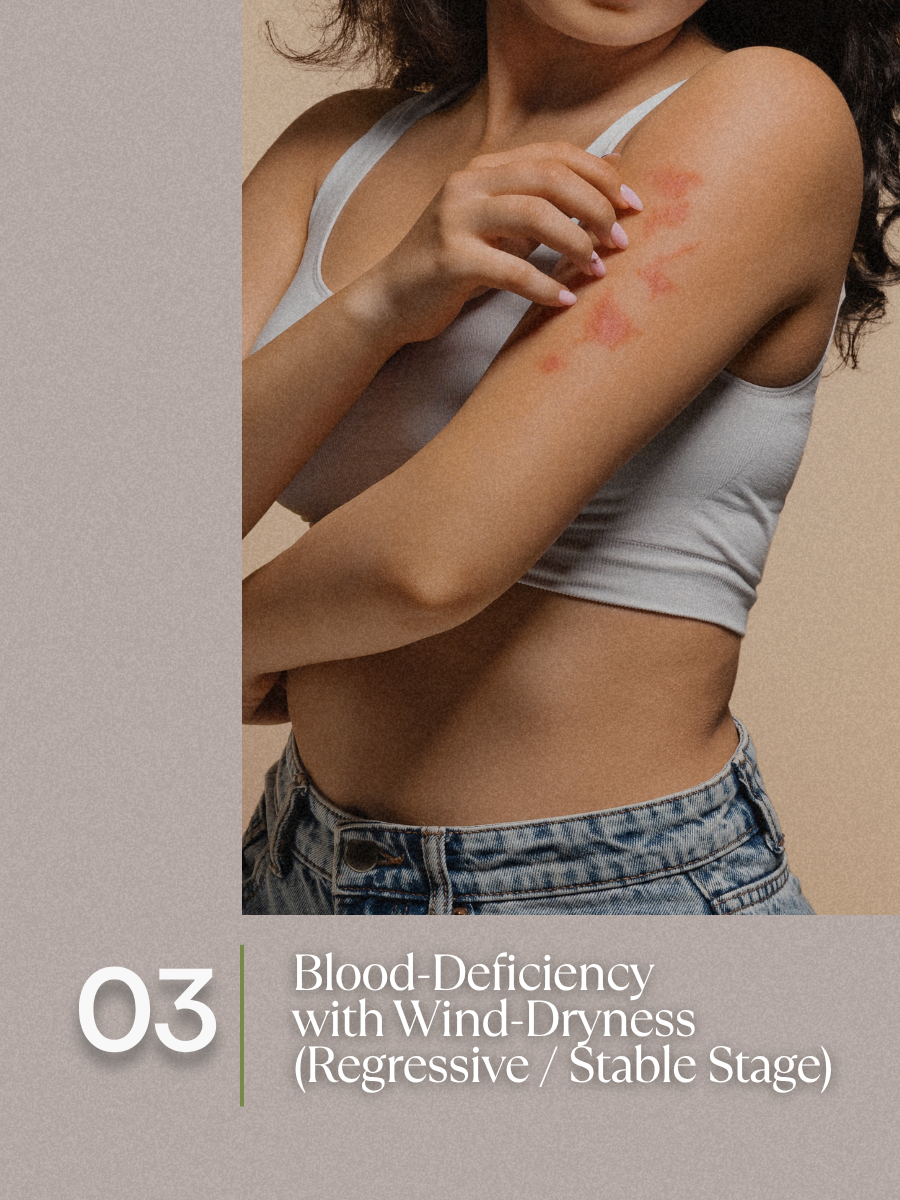
2. Blood-Deficiency with Wind-Dryness Syndrome (血虚风燥证) — Regressive / Stable Stage
- Clinical presentation: Longer disease duration with persistent, slow-resolving lesions; erythema fades to a paler or dusky-red hue; scaling becomes dry and thickened, resembling crusts. Skin is markedly dry with intense itching. Tongue is pale with scanty coating.
- Treatment principle: Nourish the blood, dispel wind, moisten dryness, and disperse macules.
- Representative herbs: Dang Gui, Dan Shen, Sheng Di Huang, Ji Xue Teng, Mai Men Dong, Tian Men Dong, Huang Qi, Bai Shao.
3. Blood-Stasis Obstructing the Collaterals Syndrome (瘀血阻络证) — Stable Stage
- Clinical presentation: Thickened, indurated plaques with a dusky-red or purplish-brown coloration; scales adhere tightly to the surface and are difficult to remove. Tongue is dark red, or shows petechiae/ecchymoses.
- Treatment principle: Invigorate blood circulation, resolve stasis, and unblock the collaterals to disperse macules.
- Representative herbs: Tao Ren, Hong Hua, E Zhu, Ji Xue Teng, Hong Teng, San Leng, Gui Jian Yu.
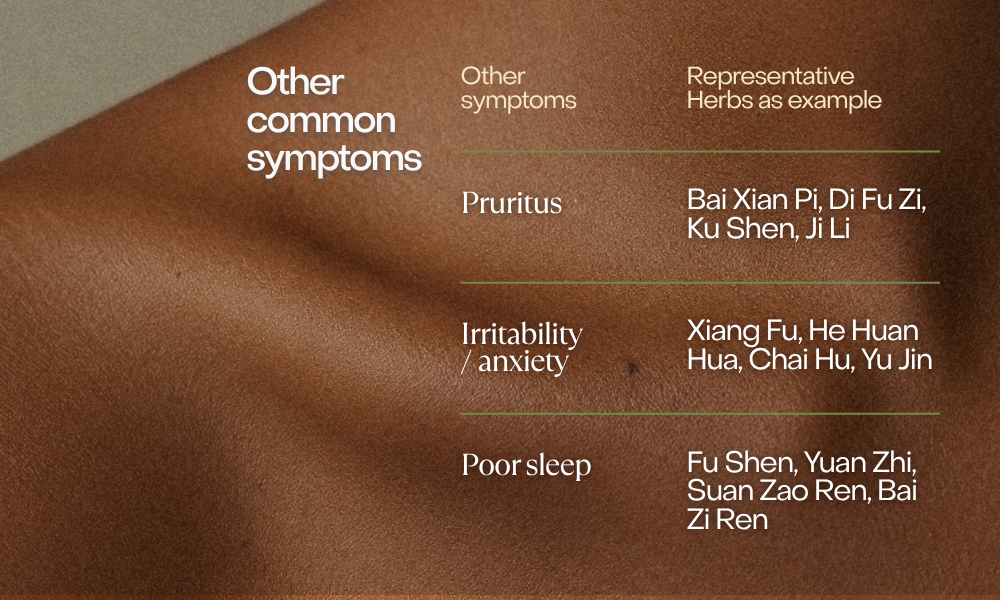
Other common symptoms
These three syndrome types are not mutually exclusive or static; clinical presentations frequently transition from one pattern to another as the disease evolves — for example, from an acute Blood-Heat phase into a chronic Blood-Dryness or Blood-Stasis phase. Herbal formulas should therefore be adjusted according to the disease progression.
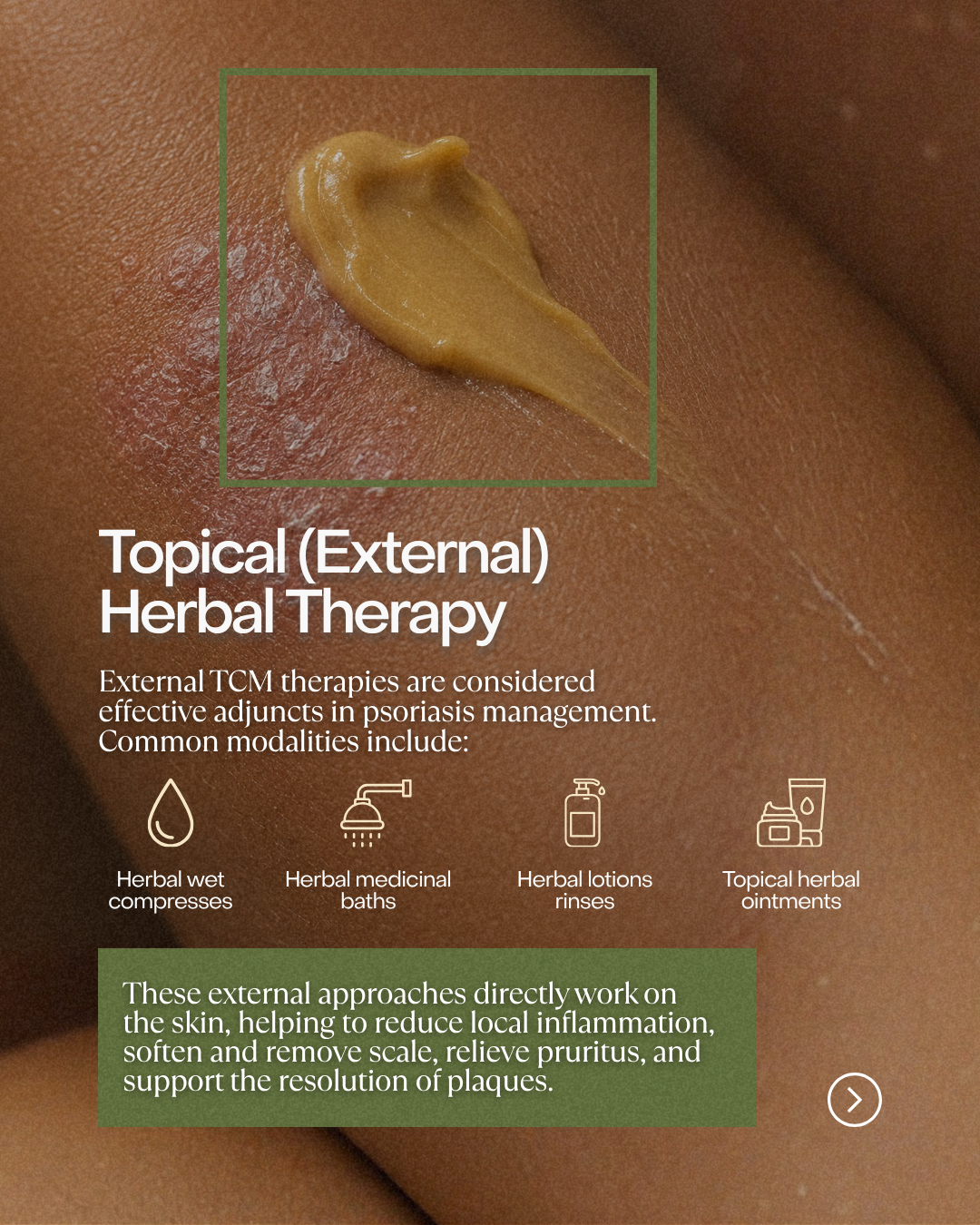
Topical (External) Herbal Therapy
External TCM therapies are considered effective adjuncts in psoriasis management. Common modalities include:
Herbal wet compresses
Herbal medicinal baths
Herbal lotions / rinses
Topical herbal ointments
These external approaches directly work on the skin, helping to reduce local inflammation, soften and remove scale, relieve pruritus, and support the resolution of plaques.
Topical Solutions at Kamwo
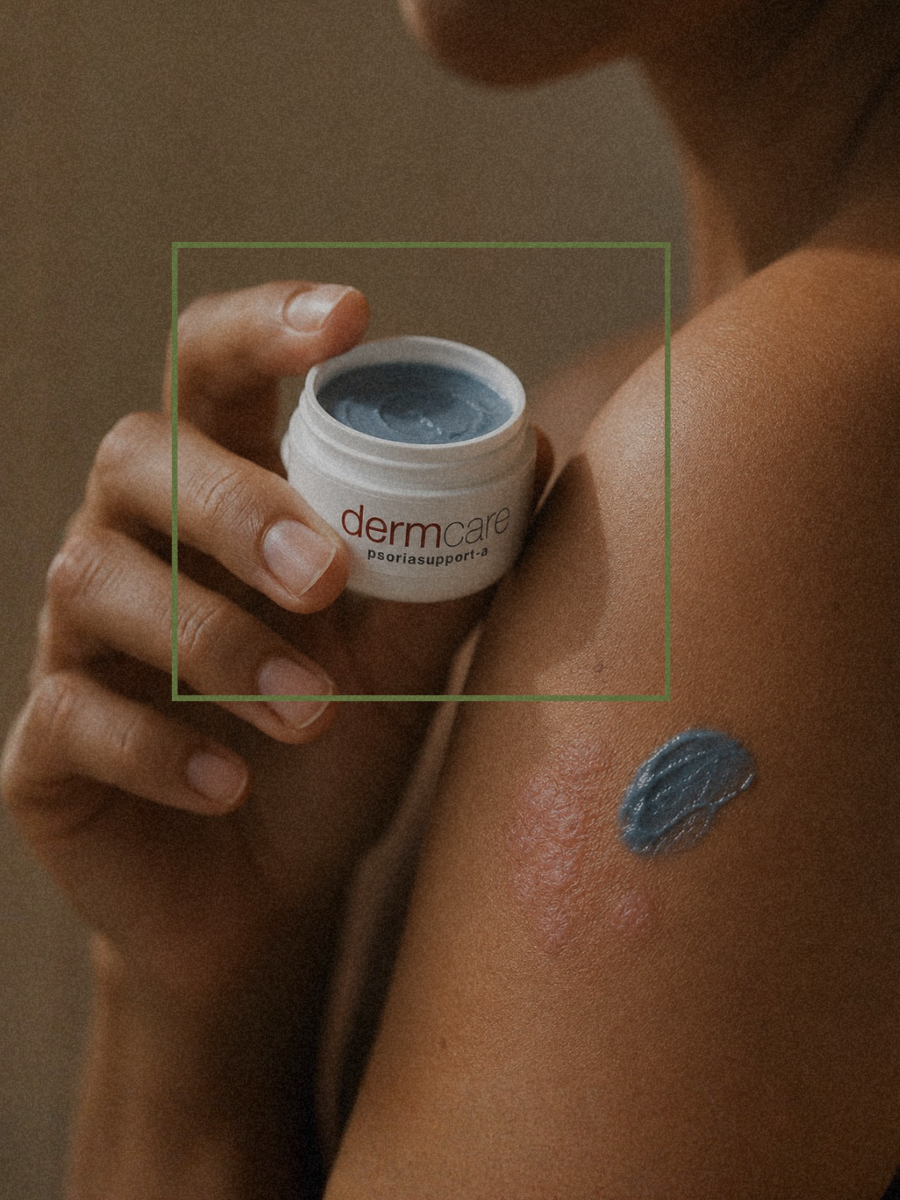
-
Indicated for management of symptoms associated with Psoriasis Vulgaris (acute type) which commonly appear as smooth inflamed patches of skin.
Ingredients:
Qing Dai
Ku Shen
Gan Cao
Zinc Oxide
Ointment Base: White Petrolatum
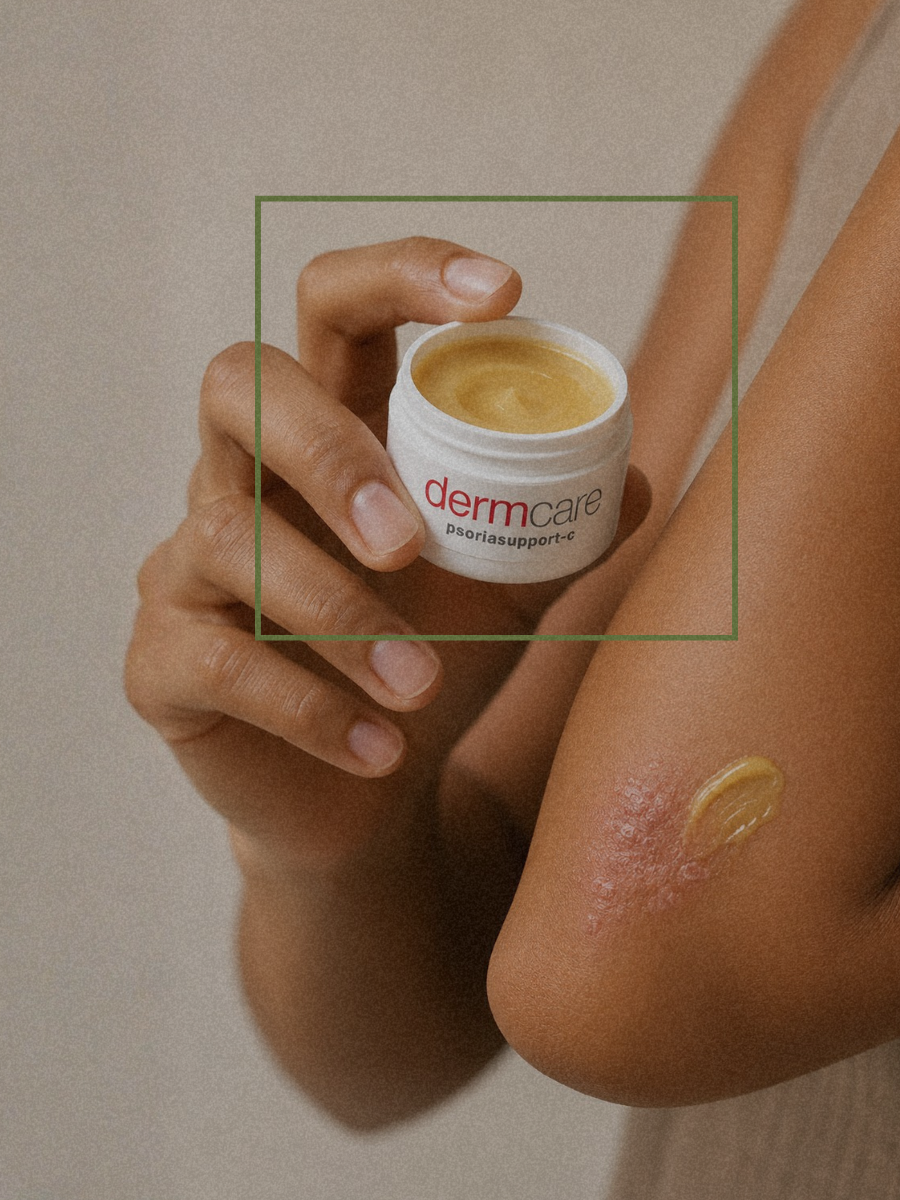
-
Indicated for management of symptoms associated with Psoriasis Vulgaris (chronic type) which commonly include thick plaque but with minimal skin inflammation or no erythema.
Ingredients:
Tu Jin Pi
Bai Bu
Niu Xi Xi
Gan Cao, Coal Tar Solution
Cream Base: White Petrolatum
Other TCM modalities
On top of herbal remedies, acupuncture, cupping, and moxibustion extend beyond herbal bathing therapy and may help alleviate psoriasis symptoms by stimulating specific acupuncture points and promoting the regulation and circulation of Qi and blood.
The TCM Takeaway
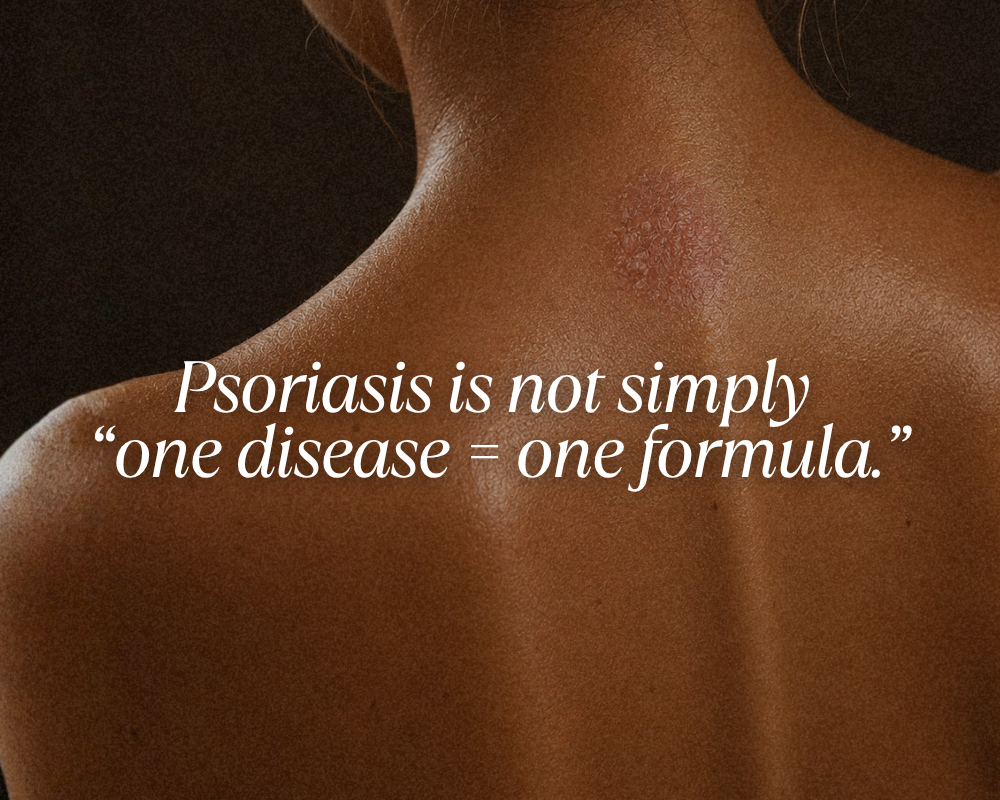
TCM treatment emphasizes pattern differentiation—observing the disease stage, skin presentation, accompanying symptoms, and individual constitution, then adjusting the treatment strategy as the pattern evolves.
From blood heat to blood deficiency to blood stasis, the clinical picture may shift over time. The treatment should be adjusted based on the disease progression.
Herbal medicines and topical preparations should be used under the guidance of a licensed practitioner. TCM care should complement, not replace, appropriate dermatologic evaluation and evidence-based psoriasis treatment.
Why Choose Kamwo?
At Grand Meridian Clinic, we blend TCM wisdom with modern approaches to uncover and treat the root of your skin concerns. Whether it’s through customized herbal therapy, acupuncture, or seasonal care plans, Kamwo is here to support your wellness journey.
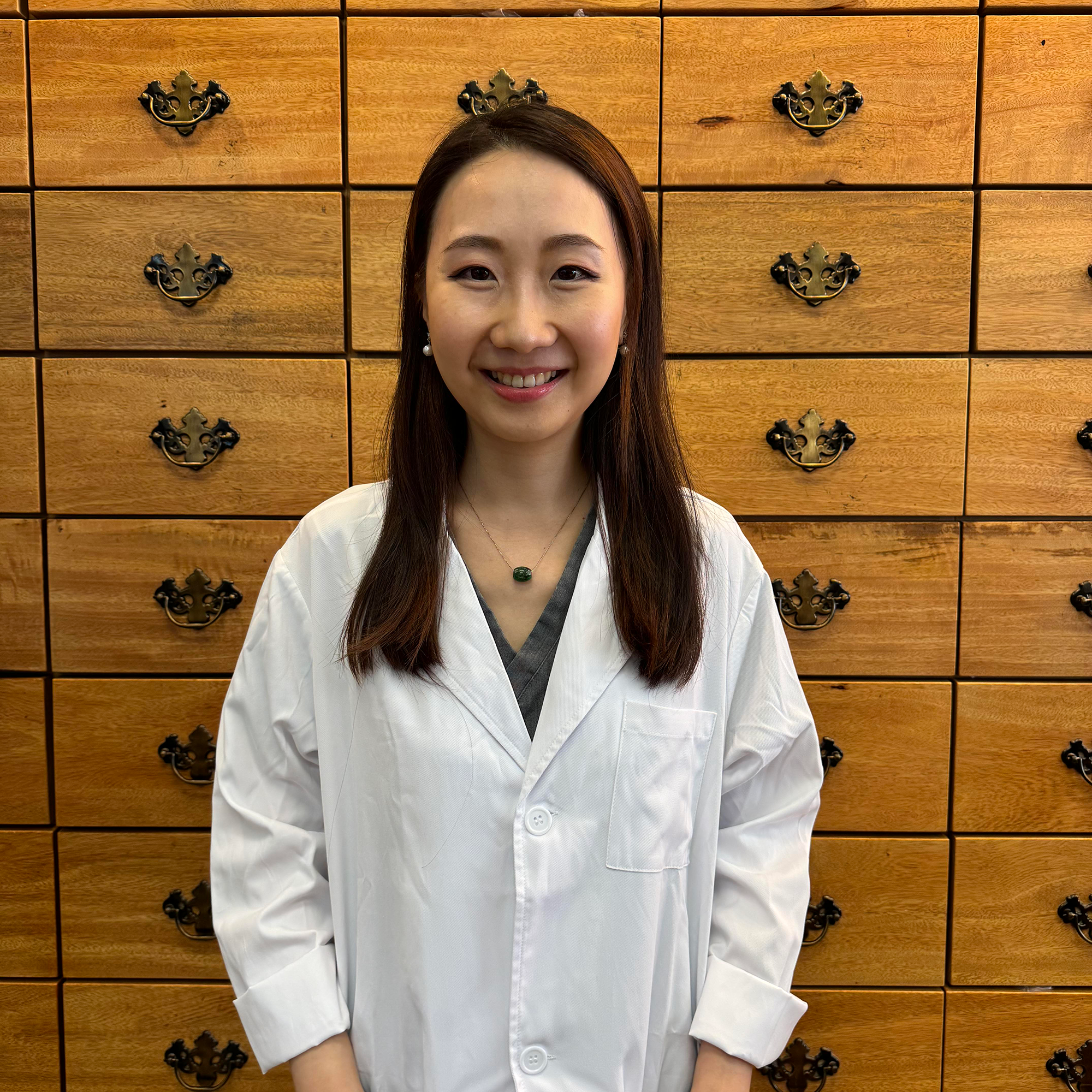
Dr. Olivia Choi
L.Ac, DACM, MPH, MScBBB, BPharm
Grand Meridian Clinic