Bleeding Peripheral Points: An Acupuncture Technique

Piercing a vein or small artery at the tip of the body-finger tips, toes, or top of the ears-is a technique well-known among acupuncturists. To the uninitiated Westerner, this therapy may seem even stranger than standard needling that is explained as a method of adjusting the flow of qi in the vessels. In this case, a few drops of blood let out from one or more peripheral points by quickly stabbing the skin with a lance is said to have significant effects.

Image sourced from ITM Online. Available at: http://www.itmonline.org/image/bleed4.jpg

The significance of traditional pulse diagnosis in the modern practice of Chinese Medicine

The changing setting in which Chinese medicine is practiced in modern versus ancient times, especially with the advent of advanced technological medical diagnostics, has raised questions as to the value of pulse diagnosis. Should its use be limited to confirming a diagnosis reached by other means? Or, does the pulse information add critical information that can greatly alter the treatment strategy? Training in pulse diagnosis is often quite limited; further, the requisites for carrying out a traditional style diagnosis are sometimes absent from the clinical setting, making the results of the pulse taking less certain. How does one get the desired information under such circumstances?

Effectiveness of Therapeutic Massage for Generalized Anxiety Disorder: A Randomized Controlled Trial

Although massage is one of the most popular complementary and alternative medical (CAM) treatments for anxiety, its effectiveness has never been rigorously evaluated for a diagnosed anxiety disorder. This study evaluates the effectiveness of therapeutic massage for persons with generalized anxiety disorder (GAD).

Photo by © LWA/Dann Tardif/Blend Images/Corbis. Image of a young woman having a scalp massage. Available at: https://www.shutterstock.com/es/image-photo/mashage-davis-seguir-4217343868

A Study Guide to Phlegm Resolving Herbs

Phlegm is a product of the body's activities acting upon qi and moisture taken in with food and beverages; it is "congealed moisture." Unlike qi, phlegm is always viewed by Chinese physicians as substantive and stagnating rather than light and flowing, though there are two kinds of phlegm: the visible, which has greater accumulation of matter, and the invisible, which is finely divided, though not as fine as qi. Phlegm is, in some ways, comparable to another body humor, blood, which is also produced by the body's activities acting upon qi, and is a sticky substance that shares some of the same potential pathologies with phlegm: deficiency, inadequate circulation, firm coagulation, and complexing with heat or cold factors.

Photo by Kamwo. Image sourced from Kamwo.

Dragon's Bone & Teeth

Dragons (Chinese: long) are a potent and prominent symbol in Chinese culture. The origin of the dragon image is unknown because it is so ancient. However, it is not unreasonable to assume that some of the massive fossilized bones encountered in several parts of China, including dinosaur and mammoth bones, were thought by ancient people to be those of huge dragons.

Image sourced from ITM Online. Available at: http://www.itmonline.org/image/dragon4.jpg

Study reveals role of spleen in prolonged anxiety after stress

"We found that immune cells in the spleen can contribute to chronic anxiety following psychological stress," said Daniel McKim, a graduate student at The Ohio State University and the lead author of the study.
"Our findings emphasize the possibility that the immune system represents a novel therapeutic target for the treatment of mental health conditions."

Credit: George Hodan/public domain. Scientists are uncovering clues. Image sourced from Science X. Available at: https://scx1.b-cdn.net/csz/news/800a/2014/stress.jpg

Tea Tuesday: Meet The Chai Wallahs Of India

On virtually every other street corner, in every city or town or village in India, there is a chai wallah — a tea vendor who supplies the piping hot, milky brew that fuels the country.And because everybody — politicians, rickshaw drivers, schoolteachers — needs a daily cuppa, chai wallahs get to meet people from every walk of life.

Ravi, a chai wallah in the south Indian city of Pollachi. Photo courtesy of Zach Marks and Resham Gellatly. Image sourced from NPR. Available at: https://media.npr.org/assets/img/2016/06/13/9.pollachi_smaller_custom-f67d9f788f02f112013d8771b5e6a64de81f2ece.jpg?s=800&c=85&f=webp

Ku Ding Cha (Bitter Nail Tea)

Considerable health benefit is attributed to Ku Ding Cha. In traditional Chinese medicine terms, it is used to disperse wind-heat, clear the head and the eyes, and resolve toxin, thus being used for common cold, rhinitis, itching eyes, red eyes, and headache. In addition, it is said to calm fidgets and alleviate thirst, especially when one is suffering from a disease that causes fever or severe diarrhea. It transforms phlegm and alleviates coughing, thus used in treating bronchitis. Finally, it is said to invigorate digestion and improve mental focus and memory.

Image sourced from ITM Online. Available at: http://www.itmonline.org/image/kuding2.jpg

Treatment of Alopecia with Chinese Herbs

Generally, alopecia is interpreted by Chinese doctors as the result of a deficiency syndrome, specifically involving blood deficiency, with generation of internal wind or invasion of external wind that affects the head; the situation is sometimes complicated by blood stasis and/or blood heat. The belief that there is an influence of wind in the etiology of the hair loss is reflected in the Chinese name for the disease, which is youfeng, literally oil-wind. The reference to oil, which can also mean glossy, is an expression characterizing the smooth, shiny scalp appearance where the hair has been lost. The Chinese name has led to some humorous translations; in the package insert for Alopecia Areata Pills, the primary indication is for "grease hair dropping."

Photo sourced from Rawpixel. Available at: https://www.rawpixel.com/image/13951415/image-cartoon-person-art

How ‘Psychobiotics’ Use Gut Bacteria To Treat Mental Illness

In a recent paper published in the journal Trends in Neuroscience, Oxford psychiatrists urge the scientific community to look beyond probiotics to consider a wider class of “psychobiotics” ― a new scientific term referring to any intervention that has an effect on mental health by way of changes in the gut microbiome.

Photo by TLFurrer via Getty Images. Scientists are looking to gut bacteria to improve mood and cognition. Image sourced from HuffPost. Available at: https://img.huffingtonpost.com/asset/581a00ff190000a304c306c3.jpeg?ops=scalefit_720_noupscale&format=webp

An assessment of the impact of herb-drug combinations used by cancer patients

Herb/Dietary Supplements (HDS) are the most popular Complementary and Alternative Medicine (CAM) modality used by cancer patients and the only type which involves the ingestion of substances which may interfere with the efficacy and safety of conventional medicines. This study aimed to assess the level of use of HDS in cancer patients undergoing treatment in the UK, and their perceptions of their effects, using 127 case histories of patients who were taking HDS. Previous studies have evaluated the risks of interactions between HDS and conventional drugs on the basis on numbers of patient using HDSs, so our study aimed to further this exploration by examining the actual drug combinations taken by individual patients and their potential safety.

Photo by Shutterstock 3260771. Image of various kinds of spices and bird eye chili sourced from Shutterstock. Available at: https://www.shutterstock.com/es/image-photo/various-kinds-spices-bird-eye-chili-3260771

Repetitive Electroacupuncture Attenuates Cold-Induced Hypertension through Enkephalin in the Rostral Ventral Lateral Medulla

Approximately one in three adults has high blood pressure (BP) worldwide. Hypertension and its consequences, such as stroke and heart attacks, are enormous public health problems1. The 7th Joint National Committee on Prevention, Detection, Evaluation and Treatment of High Blood Pressure report recommends lifestyle modification (i.e., non-traditional approaches) with or without pharmacological intervention2. Although the effect of acupuncture on hypertension is controversial3,4,5,6,7, acupuncture may offer a non-pharmacological approach to reduce high BP.

Photo by Shutterstock 152066780. Image of traditional Chinese acupuncture with electro on body sourced from Shutterstock. Available at: https://www.shutterstock.com/es/image-photo/traditional-chinese-acupuncture-electro-on-body-152066780

Plants ‘see’ underground by channelling light to their roots

Light receptors in stems, leaves and flowers have long been known to regulate plant growth. Roots also have these receptors, but it has been unclear how they sense light deep in dark soil.

Medicinal Mushroom Science: Current Perspectives, Advances, Evidences, and Challenges

Medicinal mushrooms and fungi are thought to possess approximately 130 medicinal functions. Recently studied medicinal actions of mushrooms include antitumor, immunomodulating, antioxidant, radical scavenging, cardiovascular, antihypercholesterolemic, antiviral, antibacterial, anti‑parasitic, antifungal, detoxicating, hepatoprotective, and antidiabetic effects. 

File:Dried mushrooms.Jpg. In Wikipedia. https://commons.wikimedia.org/wiki/File:Dried_mushrooms.jpg

The Mechanism of Moxibustion: Ancient Theory and Modern Research

Ling Shu, Guan Neng says that where needle does not work, moxibustion does. TCM theory holds that moxibustion has a dual effect of tonification and purgation. Different from needles and drugs, characteristics of moxibustion in materials and using fire determine that its efficacy is inclined to warming and nourishing.

Photo by Shutterstock 251320126. Image of moxibustion sourced from Shutterstock. Available at: https://www.shutterstock.com/es/image-photo/moxibustion-251320126

Acupuncture: Getting to the Point

Though pain relief is still the primary reason many Westerners seek acupuncture, more have discovered what people in China, where acupuncture is part of routine medical care, have long understood: Acupuncture can offer relief from a vast array of health problems, including digestive issues; stress, anxiety, and depression; respiratory disorders, such as asthma and allergies; hormone-related issues like infertility, PMS, and menopausal symptoms; and more.

Illustration by: Stephanie Dalton Cowan. Image sourced from Experience Life. Available at: https://experiencelife.lifetime.life/wp-content/uploads/2021/02/Nov16_ACU_HotSpots.jpg

Humble Plants that Hide Surprising Secrets


In this intriguing talk, biologist Ameenah Gurib-Fakim introduces us to rare plant species from isolated islands and regions of Africa. Meet the shape-shifting benjoin; the baume de l'ile plate, which might offer a new treatment for asthma; and the iconic baobab tree, which could hold the key to the future of food. Plus: monkey apples

Photo by Shutterstock 190564634. Image of a hand protecting a mint plant in a vegetable garden sourced from Shutterstock. Available at: https://www.shutterstock.com/es/image-photo/hand-protect-mint-plant-vegetable-garden-190564634

The Effect of Gua Sha Treatment on the Microcirculation of Surface Tissue

A Pilot Study in Healthy Subjects

Photo by Shutterstock 101865523. Image of a large bone scraper tool being used sourced from Shutterstock. Available at: https://www.shutterstock.com/es/image-photo/large-bone-scraper-tool-being-used-101865523

Gait Deviations in Children with Autism Spectrum Disorders: A Review

In recent years, it has become clear that children with autism spectrum disorders (ASDs) have difficulty with gross motor function and coordination, factors which influence gait. Knowledge of gait abnormalities may be useful for assessment and treatment planning.

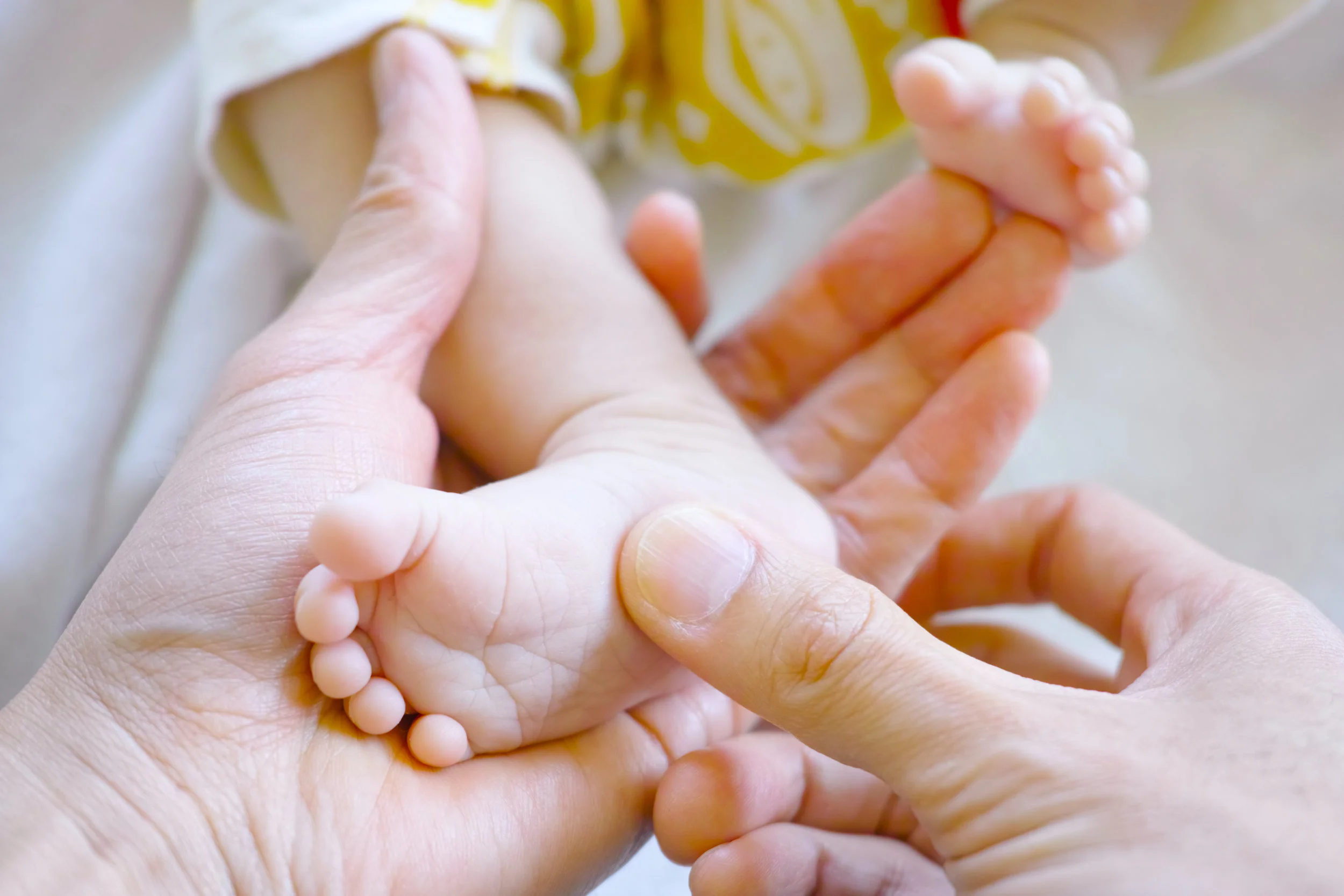
Photo by Shutterstock 190208912. Image of a newborn baby's foot being massaged sourced from Shutterstock. Available at: https://www.shutterstock.com/es/image-photo/newborn-baby-foot-sole-massage-190208912