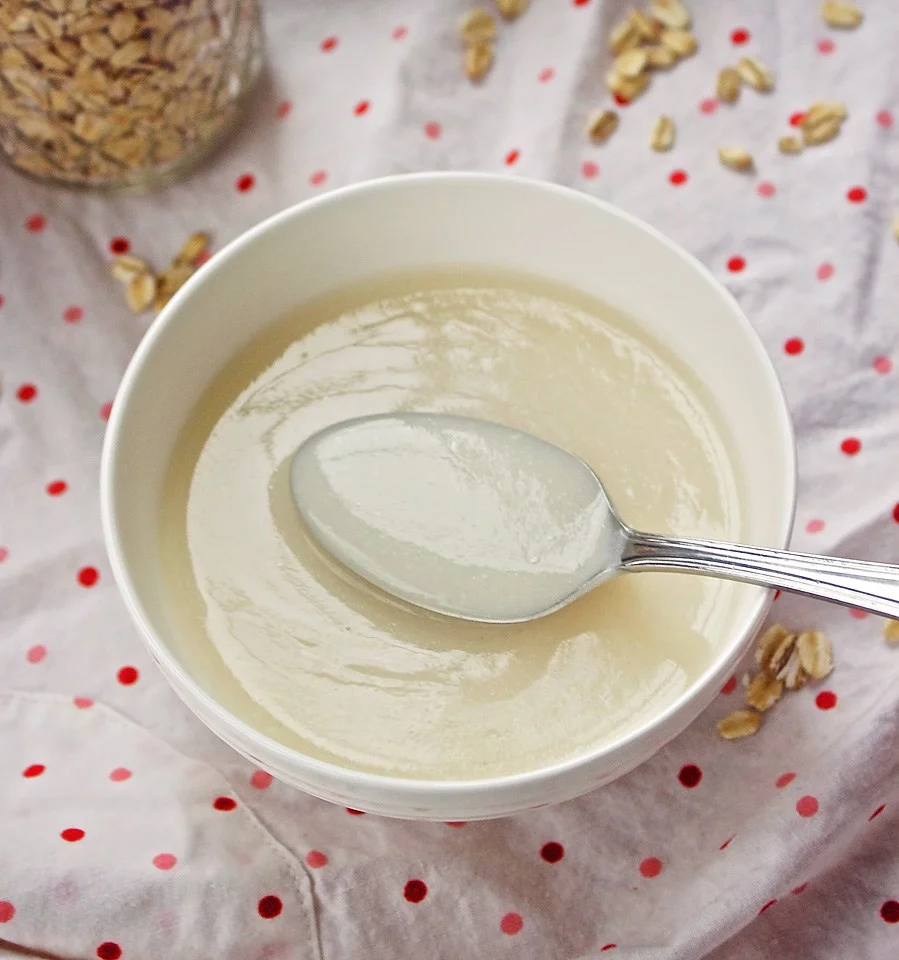
Fermented oat kissel is a traditional Russian drink that goes back to the 10th century. It was made by fermenting oats with a piece of rye bread in water for a couple of days, then straining the liquid from the solids, and allowing the starch to settle on the bottom. The starch is the most digestible part of the oat grain, which is what lactic bacteria, and particularly Lactobacillus Plantarum, prefer, and it is where the beneficial by-products of fermentation would concentrate, while bran and germ stay more resilient.
Medical Acupuncture For Vets Helps Treat Ailments
A variety of animals at the Zoo benefit from regular acupuncture treatments. With animals living longer in zoos, this non-invasive technique can block chronic pain signals and help them live comfortably.
Harvard Study Reveals What Meditation Literally Does To Gastrointestinal (Bowel) Disorders
The Sneaky Life of the World's Most Mysterious Plant
It looks so ordinary, this vine. But it’s not. It is, arguably, the most mysteriously talented, most surprising plant in the world.
Can A Plant Remember? This one seems to.
There’s this plant I’ve heard about that had a really bad afternoon a few years ago. It was in its pot bothering nobody and then, suddenly, it fell. Not once, but 56 times. (I’ll explain in a minute.) But it’s a plant. Things happen to plants, and as far as I know, they go on as before. They don’t have brains. They have no way to “remember” anything. They’re not animals. So I figure even 56 consecutive falls left no lasting impression.
Sensitive plant, shame plant (Mimosa pudica), flower and leaf, leaves sensitiv, leaflets folded after touching Photograph by blickwinkel, Alamy. Photo by National Geographic. Image of a stunning landscape sourced from National Geographic. Available at: https://i.natgeofe.com/n/686cf10b-fb74-460c-9902-f4f5242535b7/AN2DHB.jpg?w=718&h=1095
Managing your emotions can save your heart
We often think of the heart and brain as being completely separate from each other. After all, your heart and brain are located in different regions of your body, and cardiology and neurology are separate disciplines. Yet these organs are intimately connected, and when your emotions adversely affect your brain, your heart is affected as well.
Yoga For Brain Power: Mindfulness Exercises Reduce Effects Of Cognitive Impairment By Improving Memory, Mood
A recent study published in the Journal of Alzheimer's Disease found yoga and meditation could reduce the cognitive and emotional problems linked to Alzheimer's and other forms of dementia compared to memory training exercises like crossword puzzles.
How to Make Dandelion Salve
There are a lot of recipes floating around the internet for homemade balms, salves and lotions. My frustration with a lot of them is that they include a lot of ingredients I don’t have on hand. I’ve almost invested in some of these products but couldn’t ever bite the bullet and do it. Often these products can be expensive and not something I’ll use often enough to make the investment. What I love about this recipe I created is that it includes some pretty simple ingredients that most people already have at home or can purchase for a low cost. Making and using all natural skin care products doesn’t have to be expensive!
Letting It Go: Easier Said Than Done
One traditional Chinese adage says, “Your heart can create heaven or hell.” The modern version of this might read something like, “Your consciousness creates your reality.”
Water Kefir Recipe
Cayenne Salve as an Herbal Remedy for Pain Relief
How to Make Home-Brewed Kombucha
How to Cook with Cicadas
Ever since the summer of 2004, I’ve been hungry for bugs. That’s when Cicada Brood X made its last 17-year appearance, and when a Google search turned up an all-cicada cookbook from West Virginia, with dozens of recipes by women named Bea and Mabel. I was at once revolted and compelled. My wife was just revolted.
The periodical cicada (''Magicicada septendecim'') Plate 7 from ''Insects, their way and means of living'', R. E. Snodgrass. [http://www.archive.org/details/39088001578236] Caption: The periodical cicada (''Magicicada septendecim'') A female inserti
Sexuality in Chinese Medicine: Part 3
Human sexuality is closely linked to the physiology and pathology of the extraordinary vessels, especially the Du, Ren and Chong Mai.
The Du and Ren Mai are the expression of Fire and Water respectively with regard to sexuality: the exchange of sexual essences and of Yin and Yang during sexual intercourse takes place through the intertwining of the Du and Ren Mai during intercourse.
By Giovani Maciocia
Talking to Ourselves: The science of the little voice in your head
Most of us will be familiar with the experience of silently talking to ourselves in our head. Perhaps you’re at the supermarket and realise that you’ve forgotten to pick up something you needed. “Milk!” you might say to yourself. Or maybe you’ve got an important meeting with your boss later in the day, and you’re simulating – silently in your head – how you think the conversation might go, possibly hearing both your own voice and your boss’s voice responding.
By Peter Mosely
It's not Cancer: Doctors Reclassify a Thyroid Tumor
An international panel of doctors has decided that a type of tumor that was classified as a cancer is not a cancer at all.
As a result, they have officially downgraded the condition, and thousands of patients will be spared removal of their thyroid, treatment with radioactive iodine and regular checkups for the rest of their lives, all to protect against a tumor that was never a threat.
By Gina Kolata
Marijuana, Apathy, & Chinese Medicine: Part 1
Schisandra Berry Pastilles: A Five Flavor Recipe
Schisandra berry is a very special herb in that it has all five tastes. That means that in herbal theory, it contains the qualities and benefits of all five flavors. This explains why it doesn’t do just one thing!
Motherwort & Lemon Balm Brew
The Year in Fungi
If there is a rule in biology, I can think about how it does not apply to fungi,” Anne Pringle, a mycologist at the University of Wisconsin, Madison, said earlier this year. “They challenge our preconceptions of how biology works.” Neither plant nor animal (though closer to the latter in evolutionary terms), fungi are everywhere.
By Nicola Twilley