
I had a patient recently, a woman in her late forties, accomplished, measured in how she spoke, who sat down and said: "I just want to look like I'm not so tired all the time." She wasn't asking for a transformation. She wasn't asking to look younger. She wanted her face to match how she actually felt on a good day.
That is, more often than not, what people are really after.
It's also why I find facial acupuncture so well-suited to this moment. Not because it's natural or non-invasive, though it is both, but because it starts from the right question. Not what can we stop, but what can we restore?
What the Face is Actually Telling You
In Traditional Chinese Medicine, the skin is not a surface problem. It is a reflection of circulation, hormonal balance, and the quality and flow of Qi and Yin throughout the body. When those internal systems are depleted or stagnant, it shows. Dullness. A loss of tone. The particular kind of fatigue that settles around the eyes and the jaw and doesn't quite lift, even after sleep.
This is why every session in my protocol begins not with the face, but with the body. Before any needle touches the skin, we address the internal environment, the foundation that determines whether visible change is possible at all, and whether it will hold.
Treating the face in isolation is a bit like adjusting the lighting in a room without fixing the source of the problem. You can change how something looks. You can't change what it is.
How Facial Acupuncture Works
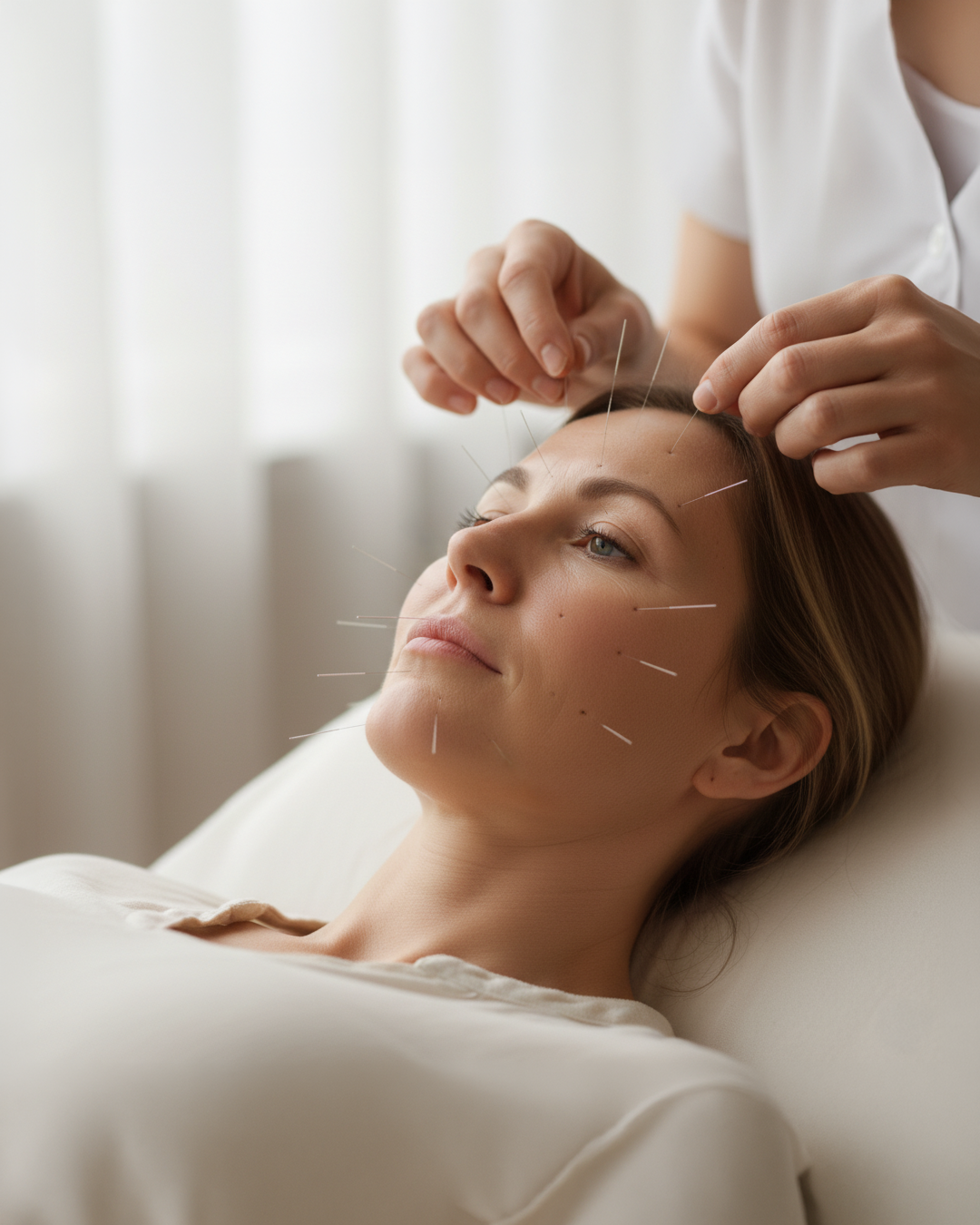
The mechanism is precise, even if the results feel almost organic.
Ultra-fine needles placed at specific facial and body points create a micro-signal, one the skin already knows how to respond to. Collagen and elastin production increases. Circulation improves, delivering oxygen and nutrients that restore tone and even out texture. Facial tension, the kind held in the jaw, the brow, and around the eyes, begins to release.
That last point matters more than most people expect. Chronic muscle tension doesn't just cause discomfort. It etches itself into the face over time, becoming the lines we associate with stress, fatigue, and the weight of accumulated years. When that tension releases, the change is visible. And it is theirs, not administered, not injected. Produced by the body itself.
A Layered Protocol
To build on what the acupuncture initiates, I incorporate several complementary modalities into each session.
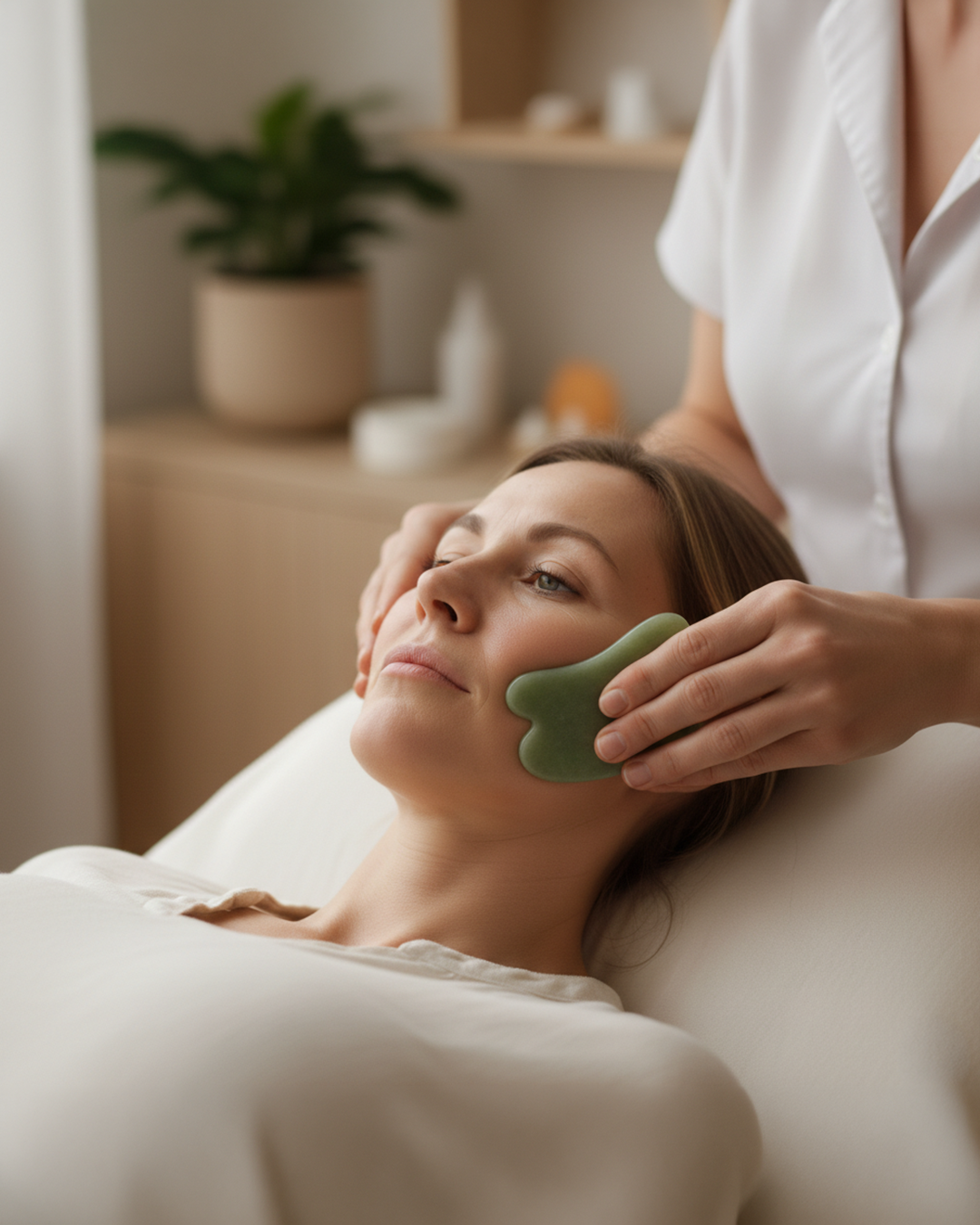
Facial gua sha works through the tissue in slow, deliberate strokes, stimulating lymphatic drainage, reducing puffiness, and encouraging the kind of brightness that reflects genuine circulation rather than surface treatment. Facial cupping follows a similar logic, using gentle suction to lift and refine tone in the underlying muscle. While the needles are resting, I apply Celluma LED red light therapy, an FDA-cleared device that works at the cellular level to reinforce collagen synthesis and support the skin's own repair processes.
None of these elements are decorative. Each one earns its place in the sequence, and together they address both structure and vitality, what the skin looks like and what it is capable of doing.
Where Microneedling Fits
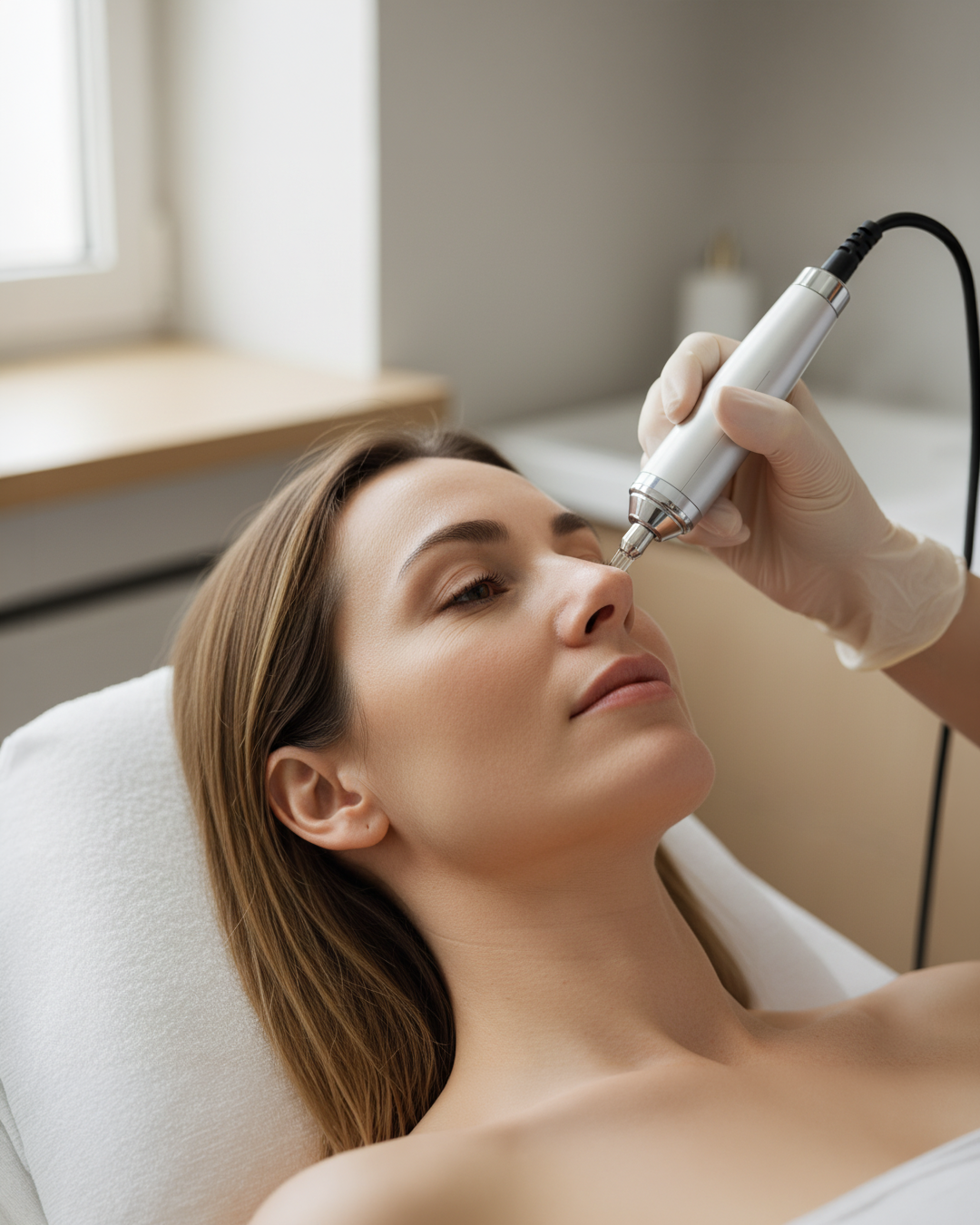
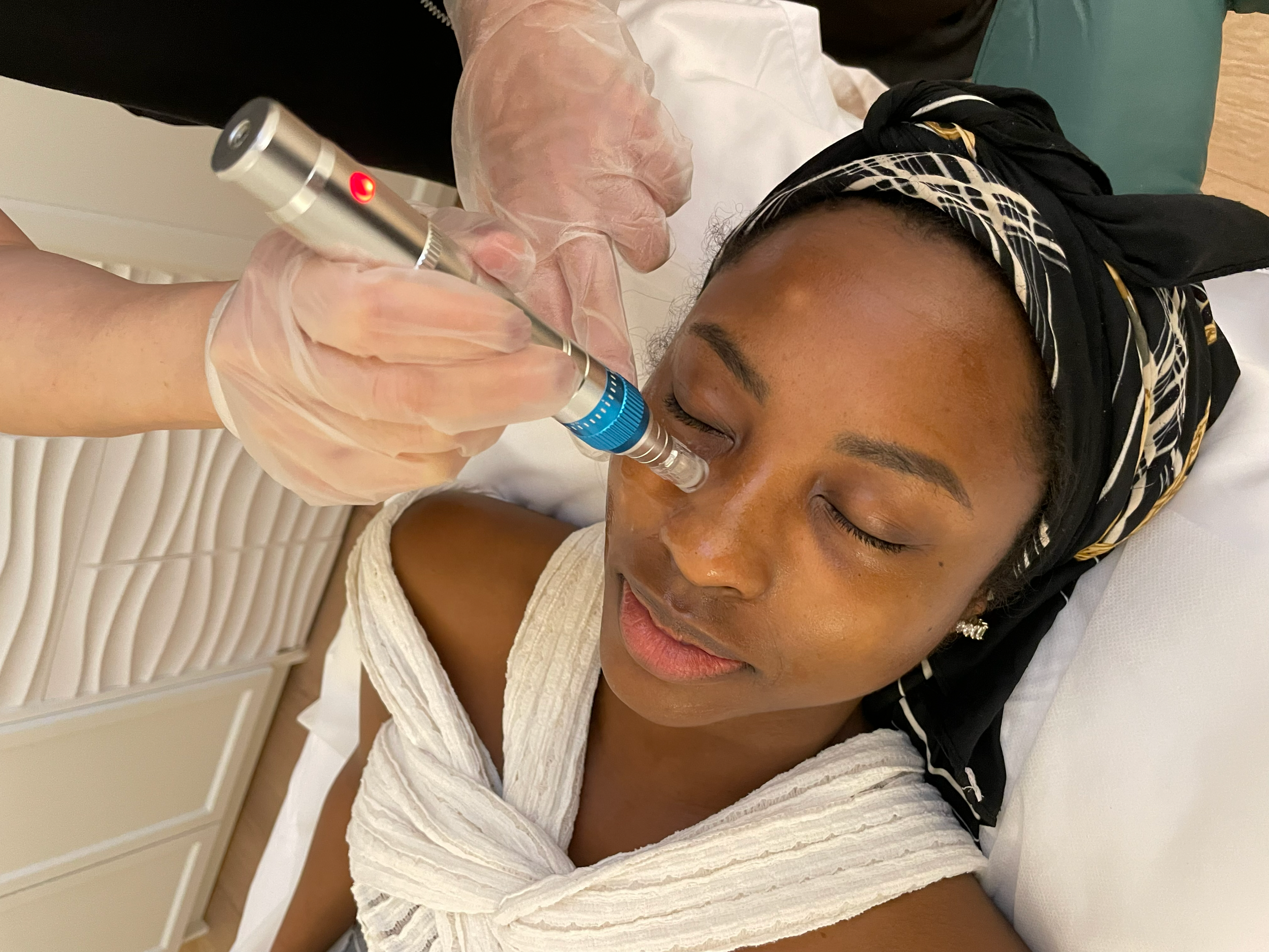
For patients interested in more targeted work, such as refining texture, minimizing pores, and addressing scarring or uneven tone, I often recommend integrating microneedling alongside the acupuncture protocol.
The distinction is worth understanding clearly. Facial acupuncture works systemically, through the body's energetic and circulatory channels, supporting skin health as an expression of overall health. Microneedling works more directly on the skin's surface, using controlled micro-channels to trigger the wound-healing response and drive collagen production in a precise, localized way.
These approaches are complementary rather than competing. Acupuncture builds the internal conditions for sustained health. Microneedling refines what is visible. Patients who integrate both tend to see results that are deeper and longer-lasting than either approach alone.
What to Expect and When
There is often something immediate. A quality of brightness, a sense of the face having settled, reduced puffiness. These are real effects, and they are encouraging. But they are not the point.
The most meaningful results develop across a series of treatments, typically weekly sessions to begin, followed by maintenance appointments every four to six weeks, as collagen gradually rebuilds, circulation improves, and the nervous system learns to hold less tension. This is not a treatment that produces a dramatic before-and-after in a single session. It produces the kind of change that accumulates quietly and then becomes the new baseline.
Patients often tell me they don't know exactly when it happened. They just noticed, one morning, that they looked like themselves again.
A Note on Aging
Traditional Chinese Medicine does not position aging as an adversary. It positions it as a process, one that unfolds more or less gracefully depending on how well we support the body's systems along the way.
I find that framing honest and, frankly, relieving. The goal is not to look younger. The goal is to look present, rested, clear, and aligned with how you actually feel. Facial acupuncture reflects that philosophy in how it works and in what it asks of the patient: not resistance, but engagement.
If you're curious about what a more integrative approach to skin health could look like for you, I would welcome the conversation. You can book a consultation at Grand Meridian Clinic, where we take the time to understand your full picture and build a protocol around that, not a formula.
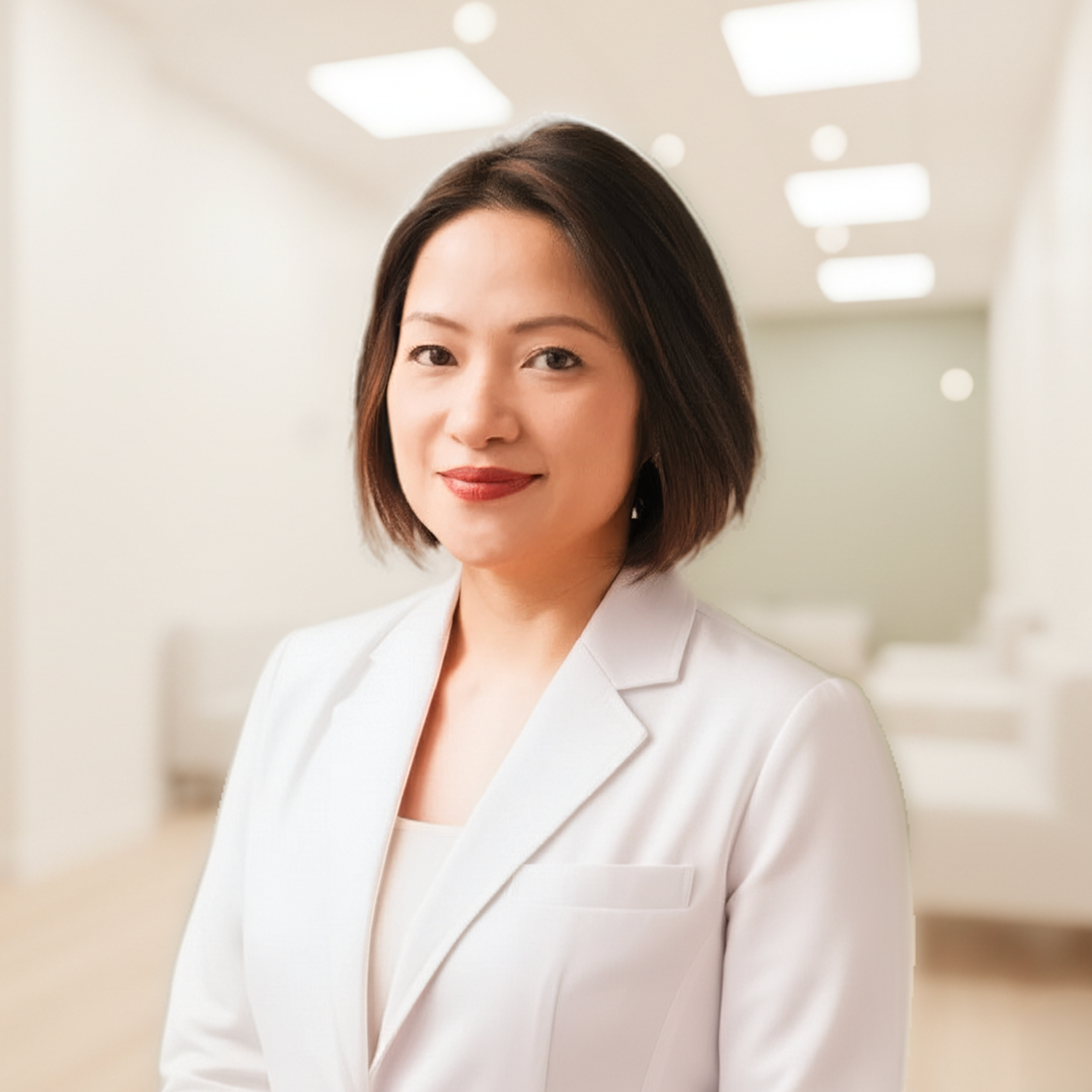
Dr. Venessa Lee
L.A.c., NCCAOM, MSTOM, DACM
Grand Meridian Clinic