Apart from the eyes being the orifice of the Heart from a Shen perspective, the Heart also influences the eyes on a physical level. Chapter 11 of the Ling Shu describes the pathways of the Divergent channels and the Heart Divergent channel goes to the inner corner of the eyes. A redness in the inner corner of the eyes often indicates Heart-Fire and not necessarily Liver-Fire as we may be inclined to conclude (given the close relationship between Liver and eyes).
Fascia and Primo Vascular System
The anatomical basis for the concept of acupuncture points/meridians in traditional Chinese medicine (TCM) has not been resolved. This paper reviews the fascia research progress and the relationship among acupuncture points/meridians, primo vascular system (PVS), and fascia. Fascia is as a covering, with common origins of layers of the fascial system despite diverse names for individual parts. Fascia assists gliding and fluid flow and holds memory and is highly innervated. Fascia is intimately involved with nourishment of all cells of the body, including those of disease and cancer. The human body's fascia network may be the physical substrate represented by the meridians of TCM.
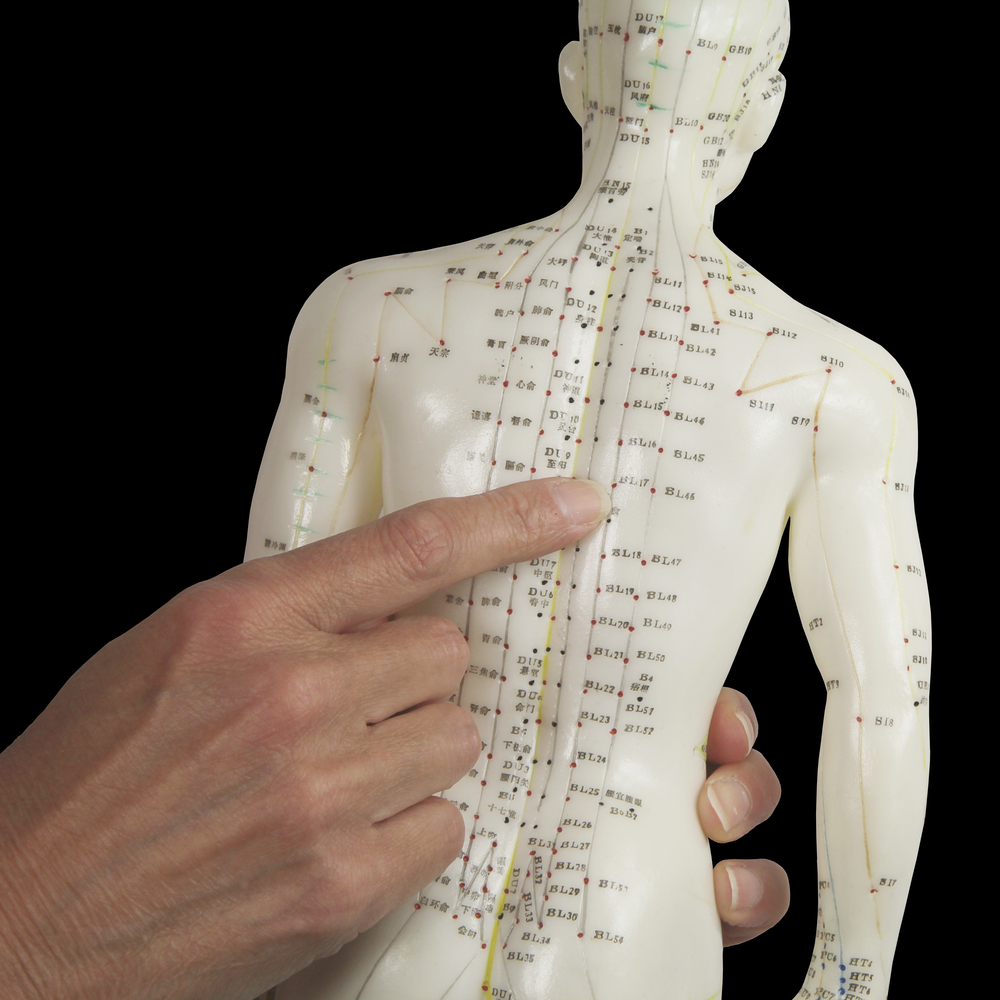
Photo by Shutterstock 281440808. Image of an acupuncturist pointing at BL17 on an acupuncture model sourced from Shutterstock. Available here.
Equine acupuncture provides comfort for horses
“I mainly use acupuncture to help manage chronic pain associated with musculoskeletal problems, such as back injuries, although it can also be used in management for other conditions such as laminitis or neuropathies,” she said.
Tumblr. (n.d.). [Image from Tumblr]. Tumblr. Available here.
Effectiveness of strengthened stimulation during acupuncture for the treatment of Bell palsy: a randomized controlled trial
The traditional Chinese theory of acupuncture emphasizes that the intensity of acupuncture must reach a threshold to generate de qi, which is necessary to achieve the best therapeutic effect. De qi is an internal compound sensation of soreness, tingling, fullness, aching, cool, warmth and heaviness, and a radiating sensation at and around the acupoints. However, the notion that de qi must be achieved for maximum benefit has not been confirmed by modern scientific evidence.
Image sourced from Pinterest. Available here.
Is Deqi an Indicator of Clinical Efficacy of Acupuncture? A Systematic Review
Deqi (in Chinese pinyin, literally translated as “arrival of qi”) refers to a composite of sensations felt at the needling site after adequate needle insertion with or without proper manipulation. The production of such a special response of the human body is believed to be based on the flow of qi (energy) along channels referred to as meridians in the body. The term is also known as “needling sensation” in more contemporary textbooks and literatures [1]. Typically, the needling sensation is characterized by specific sensory perceptions such as soreness, numbness, distension, and heaviness. However, perceptions of Deqi vary with recipients, manipulation techniques, and the modes of acupuncture stimulation applied. Less frequently, acupuncture recipients may have feelings of coldness, warmth, itching, aching, or twitching, and such a sensation can sometimes be conducted from the needling site towards a more distant area along the meridian. In the meanwhile, the practitioner feels tenseness, drugging, sinking, and vibrations around the needle tail [2].
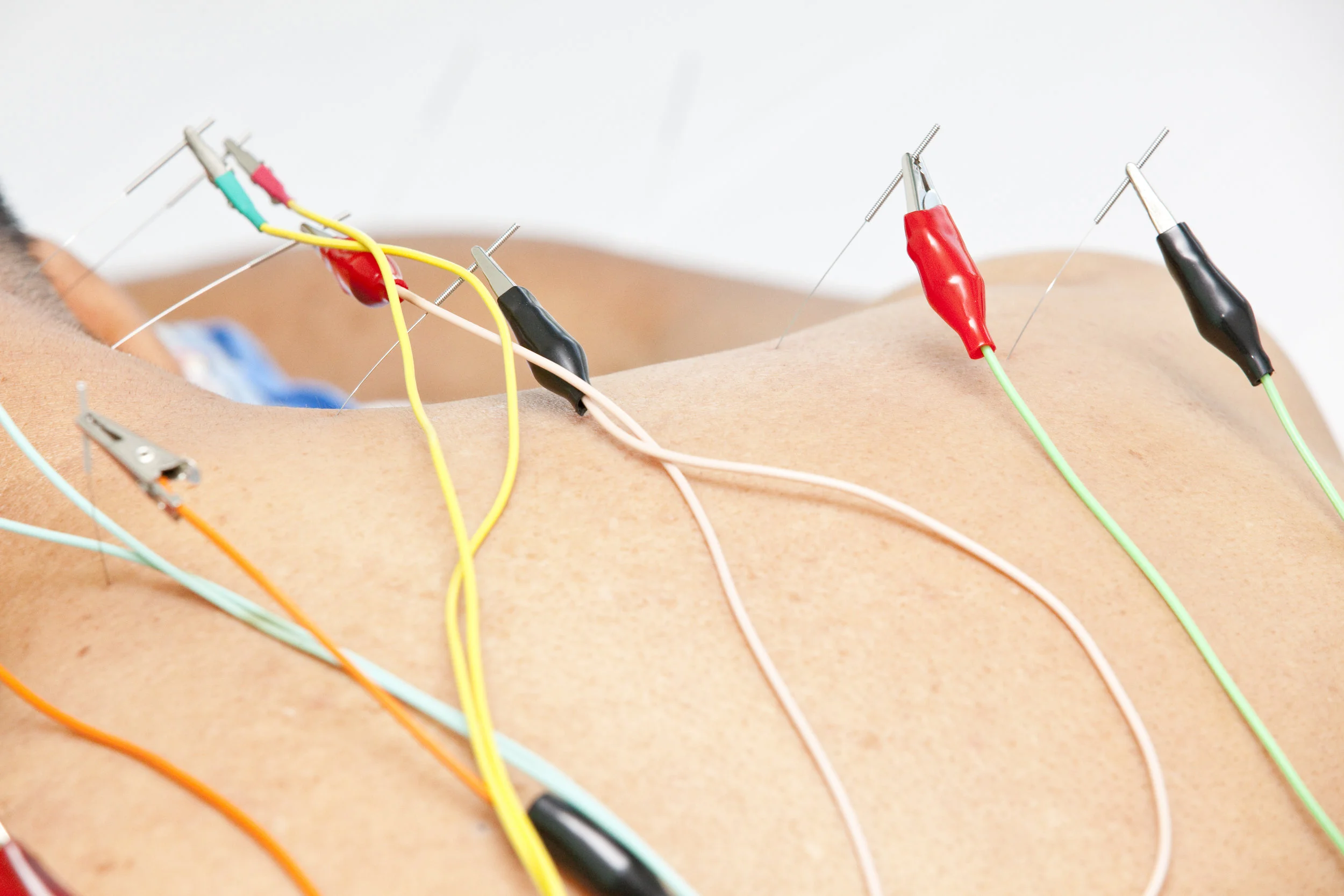
Photo by Depositphotos 30618573. Image of acupuncture treatment sourced from Depositphotos. Available here.
Why Ice Delays Recovery
When I wrote my best-selling Sportsmedicine Book in 1978, I coined the term RICE (Rest, Ice, Compression, Elevation) for the treatment of athletic injuries (Little Brown and Co., page 94). Ice has been a standard treatment for injuries and sore muscles because it helps to relieve pain caused by injured tissue. Coaches have used my "RICE" guideline for decades, but now it appears that both Ice and complete Rest may delay healing, instead of helping.
When Friends and Family Ambush You for Free Medical Advice
As every doctor knows, requests for medical advice don't end when a doctor leaves the office for the day. They are made in parking lots and supermarkets, on buses and planes, at weddings and funerals.
"I'm a doctor 24/7," says Sandra Adamson Fryhofer, an internist in Atlanta, Georgia. "When you're a doctor, you're never off-duty." Dr Fryhofer isn't exaggerating.
Photo by Shutterstock 164747042. Image of a happy group of people sourced from Shutterstock. Available here.
Hawthorn (Crataegus)- Food and Medicine in China
In ancient times, the Chinese herbalists mainly used crataegus (shanzha) to improve digestion; for the past thirty years, Western applications of crataegus have been verified by Chinese researchers and added to its list of applications in Chinese medicine. Numerous Chinese formulations now incorporate the herb for strengthening heart function, lowering blood lipids, and dilating blood vessels to promote blood circulation.
Improving Military Resilience through Mindfulness Training
A University of Miami-led research study, led by principal investigator and neuroscientist Dr. Amishi Jha, and funded by the U.S. Army Medical Research and Materiel Command, has shown that mindfulness meditation exercises positively support active-duty Soldiers in protecting and training their own minds and helping better prepare Soldiers for high-stress combat situations while also improving overall cognitive resilience and performance.
Image sourced from the U.S. Army. Available here.
Who are the users of a traditional Chinese sanfu acupoint herbal patching therapy in China?
Fu is a special period in lunar calendar when yang (a moral connotation of light)[1] is the strongest in both human body and outside environment.[2] There are 3 or 4 fus every year, each of them lasting 10 days, and together are called as sanfu (dog days). Usually, sanfu starts from middle of July to middle of August. According to traditional Chinese medicine (TCM), applying certain therapies during sanfu could help to decrease or even stop the recurrence of winter-susceptible diseases (winter diseases) by taking advantage of inner-body and outside strongest yang qi during sanfu period, which was called “winter diseases treated in summer”.[3] And among several therapies, sanfu acupoint herbal patching (SAHP) is the most common one in China. SAHP is a TCM external therapy that combines the function of herb, the stimulation of acupuncture points and environment which only applied during sanfu.[4] The origin can be traced back to Zhang Shi Yi Tong in 1695
The safety of acupuncture during pregnancy: a systematic review
During pregnancy, women may suffer from various conditions which could affect pregnant women's health as well as normal development and delivery of the infant. Concerns over drug use during pregnancy have helped increase the use of other non-pharmacological treatments. Among them, acupuncture is increasingly practised in pregnant women.
Shutterstock. (n.d.). [Closeup of young woman's abdomen and hands]. Shutterstock. Available here.
Response of Local Nitric Oxide Release to Manual Acupuncture
This study was to examine the influences of manual acupuncture (MA) and electrical heat corresponding to reinforcing methods on nitric oxide (NO) release over the skin regions in humans. A device with collecting solution was taped to the skin surface along pericardium (PC) or lung (LU) meridian. Acupuncture needles were gently inserted into PC 4 with reinforcing stimulation (low force/rate) for 20 minutes in the MA group. LU11 on the finger was heated (43-44°C) by electrical heat for 20 minutes. Biocapture was consecutively conducted for two 20-minute intervals during and after each treatment.
Photo by Alamy. Image of acupuncture needles with cupping glasses sourced from Alamy. Available here.
Can probiotics help treat depression and anxiety?
There is a lot of interest right now in the human microbiome (the populations of bacteria that live in various parts of the body, including the intestine, skin, and lungs). We now know that there are approximately 10 times as many bacterial cells as human cells in the body. The vast majority of these bacterial cells are in the intestinal tract, and they serve many purposes, including digesting foods, manufacturing certain vitamins (for example, vitamin K), and regulating our immune system. Researchers are actively studying whether changes in intestinal bacteria can increase the risk of chronic illnesses, such as obesity or inflammatory bowel disease.
Shutterstock. (n.d.). [Many colorful pills isolated on white]. Shutterstock. Available here.
The Roots of TCM in Depression Treatment
"Yi Jing Bian Qi Lun" ("On the Therapy of Transferring Thought and Spirit"): Yellow asked, "I am told that in ancient times, when a physician treated a disease, he only transferred the patient's thought and spirit to sever the source of the disease. In nowadays, the patient is treated with drugs internally and acupuncture externally. Nevertheless, some of the diseases are cured, but some of them cannot be cured and why is it so?" Qibo answered, "In ancient times, people lived in the cave of the wilderness surrounded with birds and beasts, they drove away the coldness by motion of themselves, and evaded the hot summer by living in the shade. They had no burden in heart in admiring the fame and gain, and had no fatigue in the body for seeking a high position, thus, one can hardly be invaded by exogenous evil in this calm and plain environment. So, when one contracted disease, both drugs for curing inside and acupuncture for curing outside were not necessary, but only transferred the patients emotion and spirit to sever the source of the disease would be enough.
Photo by Shutterstock 280900325. Image of a sleeping hipster lying in tall grass with dandelions sourced from Shutterstock. Available here.
Childhood trauma leads to lifelong chronic illness — so why isn’t the medical community helping patients?
Researchers at Yale had recently shown that when inflammatory stress hormones flood a child’s body and brain, they alter the genes that oversee our stress reactivity, re-setting the stress response to “high” for life.
Photo by Shutterstock 296711729. Image of the word "anxiety" written on a wood block sourced from Shutterstock. Available here.
Botanical Biohacking 30: Dang Gui: The Queen Herb For Women’s Health
A pilot study of yogic meditation for family dementia caregivers with depressive symptoms: Effects on mental health, cognition, and telomerase activity
This pilot study found that brief daily meditation practices by family dementia caregivers can lead to improved mental and cognitive functioning, and lower levels of depressive symptoms. This improvement is accompanied by an increase in telomerase activity suggesting improvement in stress-induced cellular aging. These results need to be confirmed in a larger sample.
Image sourced from Alamy. Available here.
Taste isn't just for taste buds anymore
This article will explore the diversity of organs that express elements of the taste transduction cascade and their functions in each area. Taken together, the findings suggest that the taste transduction cascade is not restricted to taste per se or even to systems regulating food intake. The receptors mediating taste transduction evolved early in the vertebrate lineage [13], and were adopted widely as a chemodetection system in a variety of organ systems. Questions still remain as to what the natural ligands are for many of the nongustatory functions of the “taste” transduction system [14].
Figure 2. Sites in the body where cells express the canonical taste receptor cascade. Image sourced from NCBI. Available here. "Taste isn't just for taste buds anymore" by Thomas E. Finger and Sue C. Kinnamon.
Connecting insomnia, sleep apnoea and depression
Insomnia and obstructive sleep apnoea (OSA) are the two most common sleep disorders. Insomnia is a known risk factor for incidence and severity of depression, recurrence of depressive episodes and even suicide.[1] Several studies have also shown that OSA can contribute to the development of depression.[2] Insomnia and OSA often co-occur, but previous research has not addressed the interactions, for example, whether this co-occurrence is associated with worse depression.
Fenugreek (Hu Lu Ba) and Testosterone Levels
Dietary fiber rich fenugreek (Trigonella foenum-graecum) seeds have exhibited cardioprotective, hypolipidemic and other health benefits. Furosap (FS), an innovative, patented, 20% protodioscin-enriched extract was developed in our laboratory from fenugreek seeds. This study examined the free and total testosterone levels, sperm profile and morphology, sexual health, mood and mental alertness, and broad spectrum safety parameters of FS in 50 male volunteers following supplementation over a period of 12 weeks.
Fenugreek (Methi) seeds for cooking or planting. Photo by Shailesh Humbad, sourced from Wikimedia Commons. Available here. Venthayam in Thamizh. Humbads at en.wikipedia.